How Ukrainian ecologists shape the European water resources monitoring system: the success story of NECU in the SUNDANSE Project
General information about the SUNDANSE Project
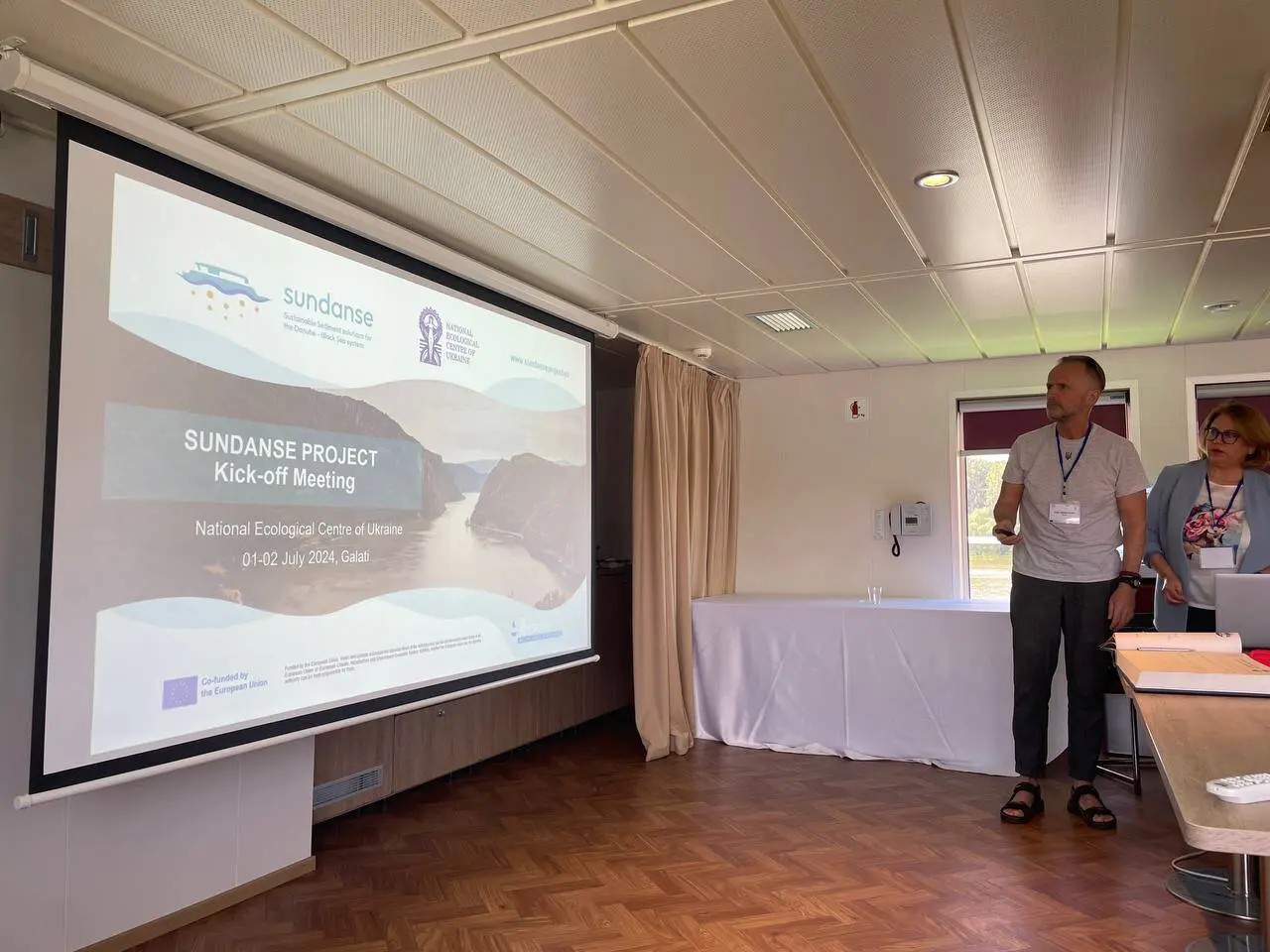
The SUNDANSE (Innovative sediment management framework for a SUstainNable DANube black SEa system) project is implemented within the Cluster 5 call under the EU Mission «Restore our Ocean and Waters» HORIZON-MISS-2023-OCEAN-01-02 Danube river basin lighthouse: Demonstration of effective and sustainable management of sediments in the Danube river – Black Sea system.
Funded by the EU under the Grant Agreement 101156533, signed on May 15, 2024.
Duration: June 3, 2024 – June 2, 2028.
Total project budget: EUR 9,011,741.88.
EC contribution: EUR 8,497,157.50.
Budget of the Ukrainian side: EUR 290,862 (100% of EU funding).
Coordinator: Universitatea «Dunărea de Jos» din Galați (Romania).
SUNDANSE is aimed at innovative solutions for sustainable sediment management and restoration of ecological balance in the Danube – Black Sea system, including the development of critical point maps, modeling of sediment transportation processes, the use of portable devices for microplastic analysis, as well as the creation of a comprehensive sediment management framework.
Ukrainian ecological public organisation in the Horizon Europe Programme
The participation of public organisations (NGOs) in large international scientific projects is always a challenge for Ukraine for a number of reasons, especially in wartime conditions. However, by joining the SUNDANSE the National Environmental Center of Ukraine (NECU) proved that the Ukrainian public sector is capable of being a full-fledged, equal partner of European consortia.
How the idea of joining SUNDANSE came about
The NECU team has systematically tracked the Programme’s contests since the previous FP Horizon 2020, using the Funding & Tenders Portal and NCP tools to find contests. The decision to apply followed the announcement of a call dedicated to sediment management in the Danube basin.
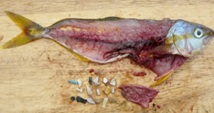
As environmental analyst Vladyslav Balinsky, who is the project coordinator from NECU, says: “We saw the announcement of a call dedicated to sediment management in the Danube basin. We started communication with a team from the city of Galati (coordinator of – Universitatea ‘Dunărea de Jos’ din Galați (UDJG)), offered our own initiative for the study of microplastics in the food chains of hydrobionts and innovative monitoring. The idea is integrated into the project in the form of Task 3.5”.
Thus, NECU joined the consortium not as an observer, but as a generator of its own scientific idea integrated into the project structure.
NECU’s role in the consortium
NECU became a full partner with a separate budget responsible for a number of important components:
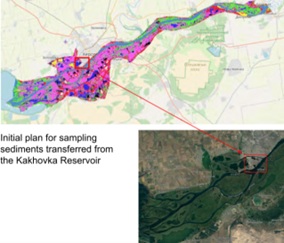
- Task 3.5 – monitoring of sediments, in particular the creation of new observation points in Vylkovo;
- co-leadership in Task 1.3 – research on the impact of pollution on aquatic biota;
- application of satellite modelling of fuel oil plumes;
- coordination of the media component of the project through “Green Sheet” and NECU digital channels.
This volume of activity demonstrates that the Ukrainian NGO can take on scientific, technical and communication tasks at the level of EU academic institutions.
Challenges during preparation and implementation
The stage of application preparation was accompanied by short deadlines, the need to work with English-language documentation and terminology. Previous experience of NECU and support from NCPs have helped.
After the victory, new difficulties arose: adaptation of legal forms to Ukrainian legislation, delays in the approval of financial accounts, as well as logistical risks associated with the war.
“War, limited access to locations, risks for the team, frequent blackouts. Despite this, it was possible to maintain the pace and achieve all the key results”, – notes V. Balinsky.
Among the important factors of sustainability – is the quick setting of communication in the consortium, which has been established since the first week: regular online meetings, active correspondence, use of shared platforms.
First results: what has already been achieved
Despite the fact that the project has not yet reached the equator, the NECU team has already implemented key research steps:
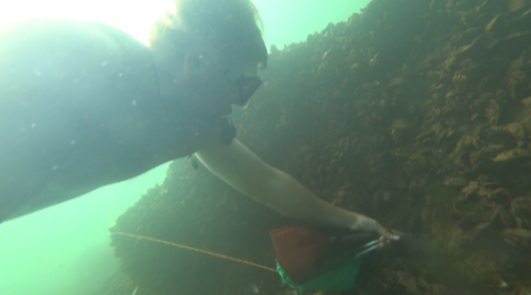
- new monitoring points were created in the city of Vylkove (Odesa region);
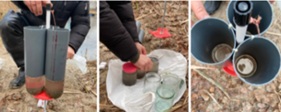
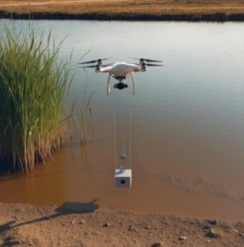
- an innovative trap for suspended sediments has been developed;
- satellite modelling of fuel oil plumes implemented;
- the impact of the russian war on the state of the Black Sea was studied;
- numerous laboratory analyses and field studies have been carried out;
- more than 15 analytical materials have been prepared;
- cooperation with NPP «Tuzlivski lyman» has been established.
This is not just a set of activities, but it is the creation of a new environmental expertise of Ukraine, integrated into the European scientific space.
Significance for Ukraine and the European Union
NECU’s activities at SUNDANSE are in line with the EU Water Framework Directive, the Sustainable Development Goals and the European Green Deal priorities. The Ukrainian team brings knowledge that is important not only for the environment, but also for the safety of shipping, fishing, the state of tourist areas, and the protection of public health.
Thus, the public organisation acts as a link between Ukrainian environmental science and European water resources management.
Outlook into the future
NECU is already planning to participate in the new Horizon Europe calls and is actively preparing for Interreg Danube programmes, LIFE and other international initiatives.
Tips for beginners
The successful experience of NECU proves that the Ukrainian environmental NGO can not only submit an application, but also receive funding and perform key scientific tasks in an international consortium.
As Vladyslav Balinsky notes: “Submit! Even if you are an NGO or university without experience – it is important to have an idea, initiative and willingness to partner. Contact the Horizon Europe Office in Ukraine and the NCP network, look for synergies, do not be afraid of international challenges – the result is worth it!”.