



Experience of the IMPE in the implementation of the AGILE Project: AGnostic risk management for high Impact Low probability Events
The AGILE project: AGnostic risk management for high Impact Low probability Events (Horizon Europe, Grant Agreement №101082532), financed by the European Union and UKRI, is a model of innovation in the field of disaster risk management (Disaster Risk Management, DRM). It brings together a multidisciplinary consortium comprising research organisations, community organisations, small and medium-sized enterprises, emergency services and local/regional authorities, with the aim of developing, developing and applying a comprehensive methodological framework and practical tools for understanding, predicting and managing high-impact, low-probability events (High Impact Low Probability, HILP) from a systemic perspective of risks and sustainability. In short: the project aims to increase the resilience of critical infrastructure to high-impact events by implementing a three-level stress test system and cooperation between scientific institutions, operators, regulators and civil protection authorities.
About the implementation of the AGILE project by the G.E. Pukhov Institute for Modelling in Energy Engineering, the National Academy of Sciences of Ukraine (IPME), Olena Ogir, PhD in technical sciences, Senior Researcher of the Institute, who is the manager and scientific leader of the working group as part of the AGILE project, told us. The institution specialises in research in the area of mathematical modelling of complex energy systems, analysis and forecasting of energy processes, development of digital technologies for managing energy infrastructure and increasing its reliability and stability.
Olena Ogir learned about the possibilities of participation in European research programmes from colleagues who already had experience of international scientific cooperation. In addition, the institution has experience of participating in projects financed by the European Union within the previous framework programme Horizon 2020. So about five years ago, as a representative of the Institute and scientific leader of the working group, Ms. Ogir began active participation in the projects of the Horizon Europa Programme. Since then, the institution’s team has been actively cooperating with European partners and participating in various research projects.
The idea of preparing a project proposal for the Horizon Europe call: HORIZON-CL3-2022-DRS-01-02 Enhanced preparedness and management of High-Impact Low-Probability or unexpected events arose as a result of scientific cooperation with European partners and common interest in research in the field of energy systems, risk management and increasing the stability of critical infrastructure and cyber security. This is a competition aimed at increasing the readiness of society and institutions to manage events with a high level of influence and low probability or unexpected events, within the Cluster 3 «Civil security for society». Currently, the working group team of the Institute accumulates experience of participation in international consortia, forms a network of potential partners and works on the development of its own project ideas.
The main scientific direction of activity of the IMPE is associated with research in the area of energy, mathematical modelling of complex systems, digital technologies and increasing the stability of critical infrastructure. That is why attention was focused on calls related to energy systems, critical infrastructure security, risk management and innovative technologies to increase the sustainability of society. And these are obviously mainly under the Cluster 3 calls.
In the AGILE Project, the Institute’s team joined an already formed consortium, where together with partners it participates in finalizing and developing the project idea. At the same time, the members of the working group of the institution accumulate experience in international cooperation and the formation of project proposals in order to be able to create and coordinate their own consortium in the future. The head of the working group notes that perhaps the institution is not going very quickly, but confidently and carefully.
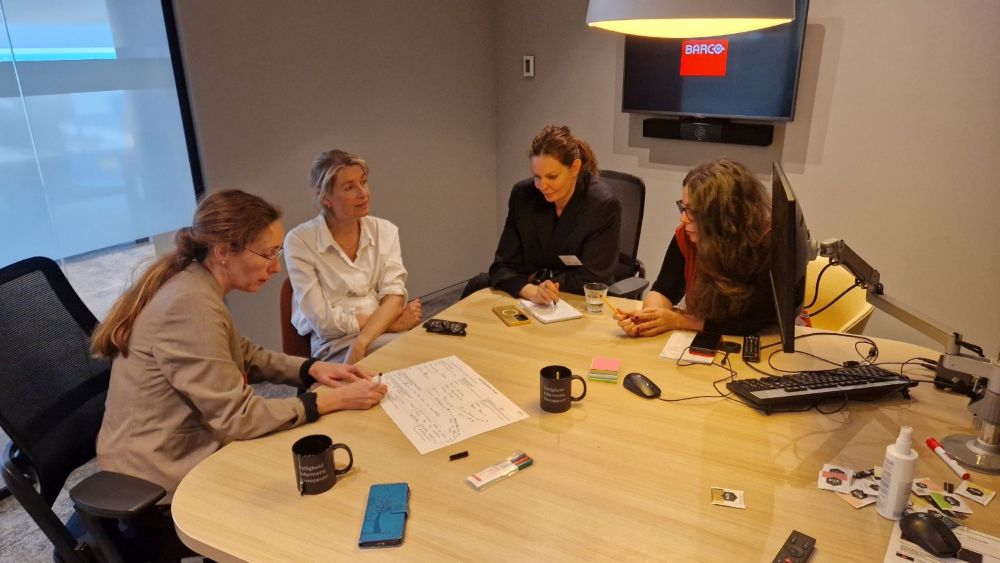
Within the project consortium, the institution acts as a research partner responsible for scientific and analytical tasks related to systems modelling, risk analysis and critical infrastructure resilience assessment, and representing the Ukrainian context. The team also participates in the preparation of methodologies, conducting research and interaction with stakeholders. As part of the project, methodologies for risk analysis, modelling of crisis situations and conducting stress tests for various sectors of critical infrastructure are being developed, which is extremely important, especially for Ukraine in the conditions of the ongoing war in our country.
At the European level, the project contributes to improving the quality of life, achieving certain EU goals. We are talking about Ukraine’s experience gained in the conditions of real crisis challenges, which is important for a better understanding of cascading risks and increasing the stability of management systems. The results of the project will contribute to increasing security, responding more effectively to crisis situations and strengthening the resilience of society, which meets the key goals of the European Union in the area of security, sustainable development and protection of critical infrastructure.
Olena Ogir talks frankly and without embellishments about the difficulties that arose in the process of activity in terms of participation in Horizon Europe. Thus, at the initial level, certain difficulties arose due to the large number of calls and the complexity of the requirements for the preparation of project documentation. However, with experience, the process of finding contests, registering on the Funding & Tenders Portal and submitting applications has become simple and clear.
Also, within the Grant Agreement, the main difficulties were related to the coordination of administrative and financial aspects, as well as the need to agree in detail on the roles of partners and budgeting issues.
“However, with the support of the project coordinator, all problems are usually resolved. We were really helped absolutely sincerely and without reproaches, the project ended successfully for all partners. There are no problems at all that cannot be solved”, – Ms. Ogir emphasises.
In addition, there were also easily solved moments. In particular, the head of the working group notes that communication with partners has been established quite quickly, since there are usually already clear mechanisms of cooperation and coordination in international consortia. Regular online meetings and working discussions helped to collaborate effectively. Also, the Ukrainian team turned to the project coordinator and the NCP for help under Cluster 3, mostly the issues related to budgeting – they all were always solved positively.
Olena Ogir believes that the team achieved the goal it set for the formation and submission of the project application: the project received funding and work is being carried out on its implementation. However, the members of the working group are still in the process of preparing their own idea for their own consortium. So, the team does not stop and in the future definitely plans to apply for other Horizon Europe calls, attracting Ukrainian colleagues and gaining experience in cooperation with foreign colleagues.
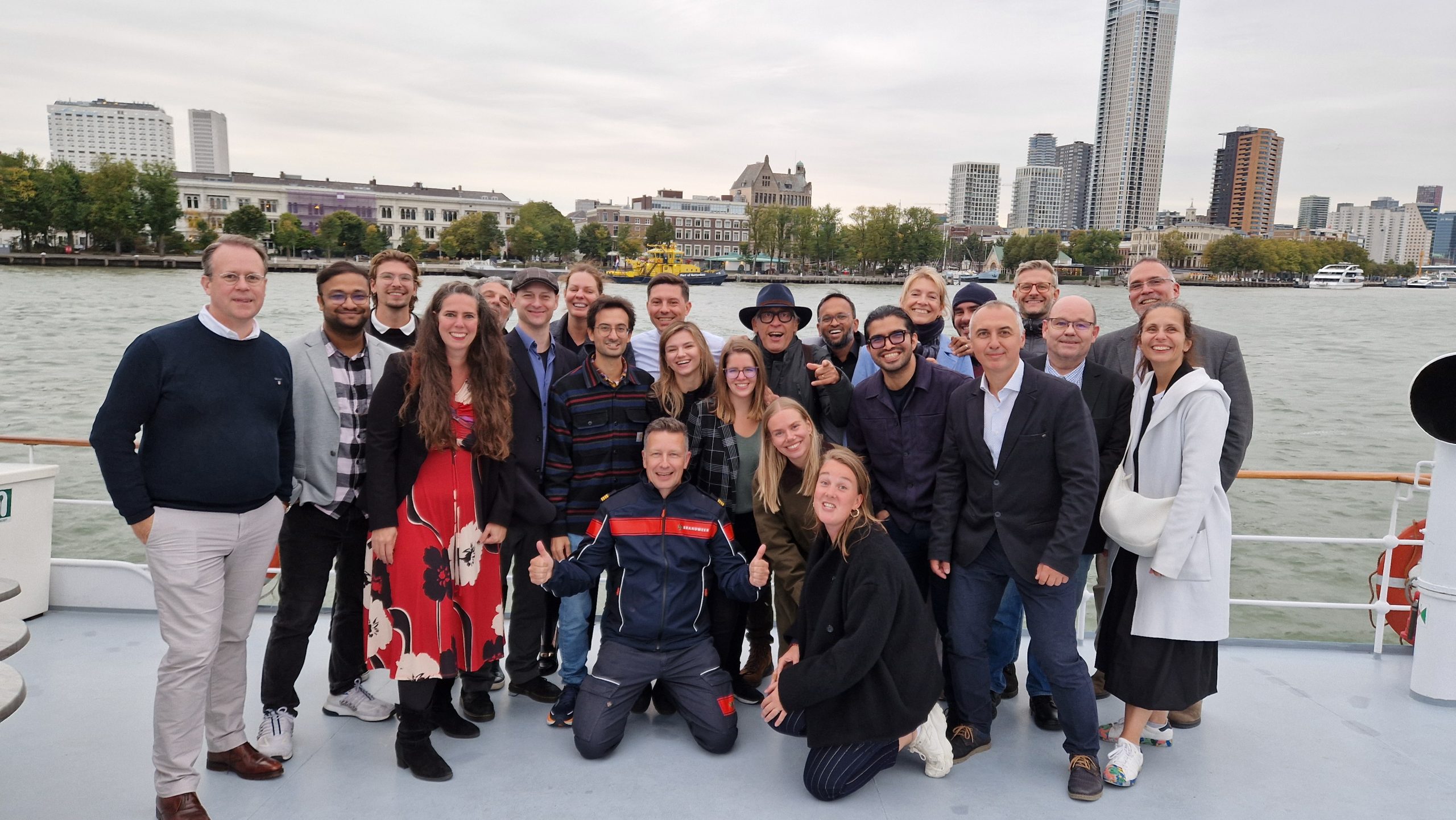
Summing up her story, Ms. Ogir encourages potential participants not to think long, but to join, not to be afraid to apply and actively look for partners for cooperation. Because each project is a small life for several years. This is not only work on research and tasks, but also new acquaintances, common ideas, experiences that will remain in memory for a long time. Separately, the head of the Ukrainian team notes the trips to the meeting of the AGILE consortium: “It was a great opportunity to personally meet with partners with whom we had worked a lot online before, discuss the next steps of the project and feel the real atmosphere of international scientific cooperation. …At such moments, pride is especially felt, how important the work on the project is and how interesting it can be”.
According to Olena, participation in this meeting is an important stage in strengthening cooperation between partners, exchanging practical approaches to project implementation and preparing for conducting similar stress tests in Ukraine within AGILE.
And the most important thing is that the experience gained, and the results of the project will be applied in Ukraine!
Reference:
AGILE
AGnostic risk management for high Impact Low probability Events
Grant agreement ID: 101121356
Duration of the project: 1 October 2023 – 30 September 2027
Funded under: Civil Security for Society
Coordinated by: JOHANNITER-UNFALL-HILFE EV (Germany)
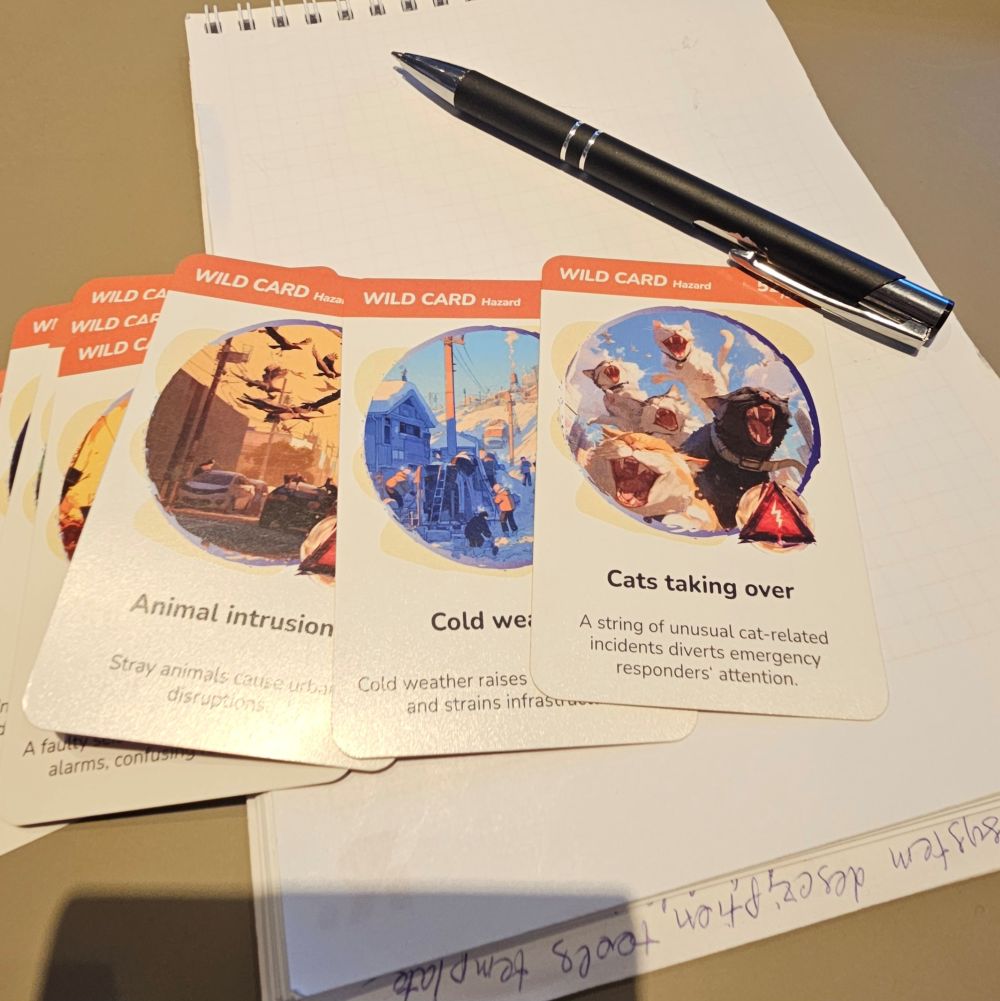
📎Photos are taken from the website of the IPME.