


Building the potential of the EU-Ukraine in the nuclear research and education: the experience of the NSC KIPT in coordinating the Horizon Europe NURECAB Project
NURECAB: EU-UA Nuclear Research and Education Capacity Building – is a 24-month project related to the implementation of the Euratom Work Programme 2023-2025. The project focuses on training, capacity building, development and networking to strengthen nuclear education and research in Ukraine and the European Union. The main goal is to support the further integration of the nuclear Ukrainian research community into the European research network, paying attention to the improvement of Ukrainian education and academic training base to build potential and carry out safe operation of Ukrainian nuclear installations and inclusive cooperation in the field of nuclear fission and thermonuclear fusion research.
The coordinator of the project is the National Scientific Center Kharkiv Physical and Technical Institute of the National Academy of Sciences of Ukraine (NSC KIPT). The institute carries out research in the field of theoretical physics, controlled thermonuclear fusion and plasma technology, specialises in the area of high-energy physics and accelerator technology, radiation materials science, clean and ultra-pure materials.
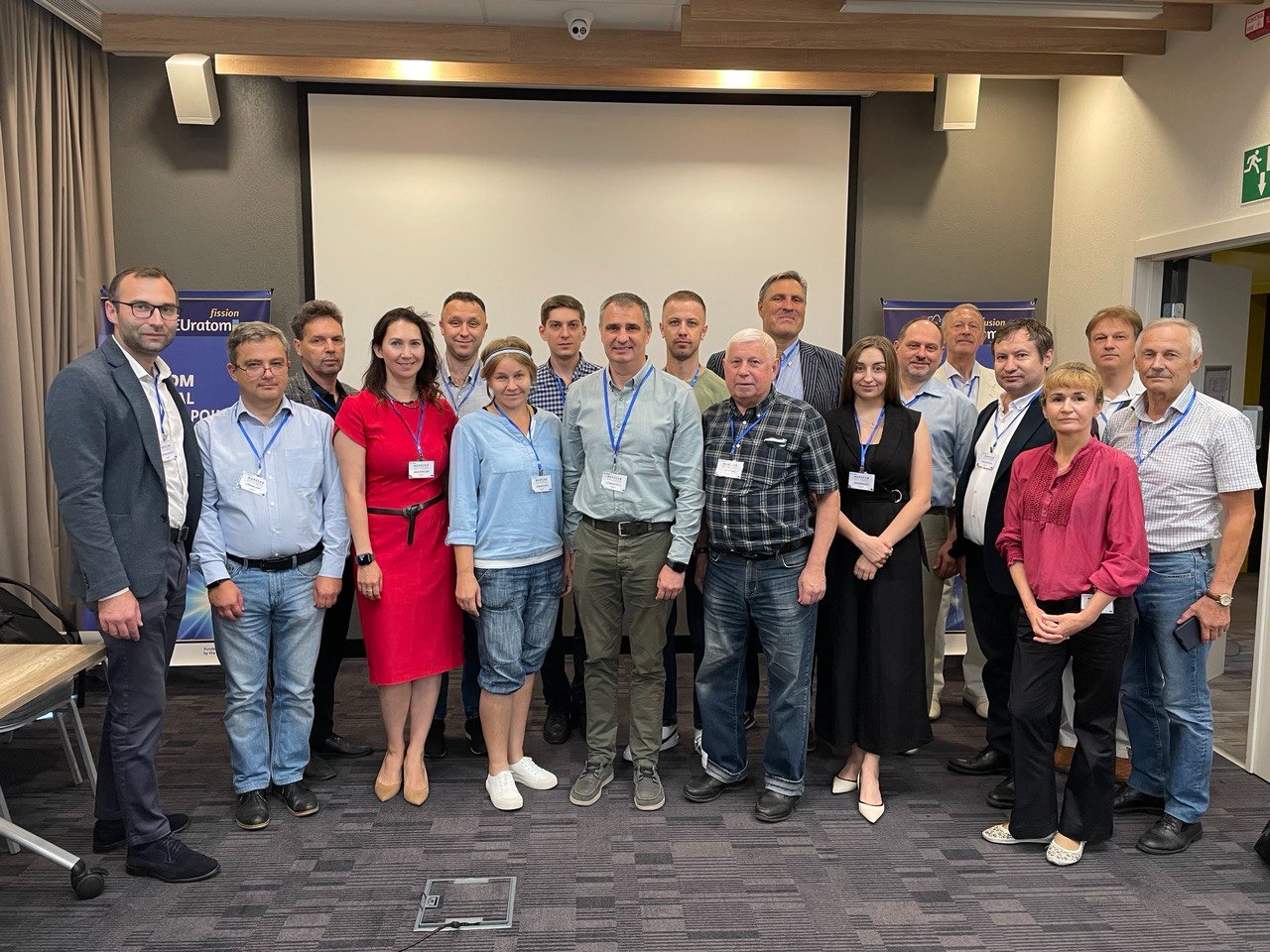
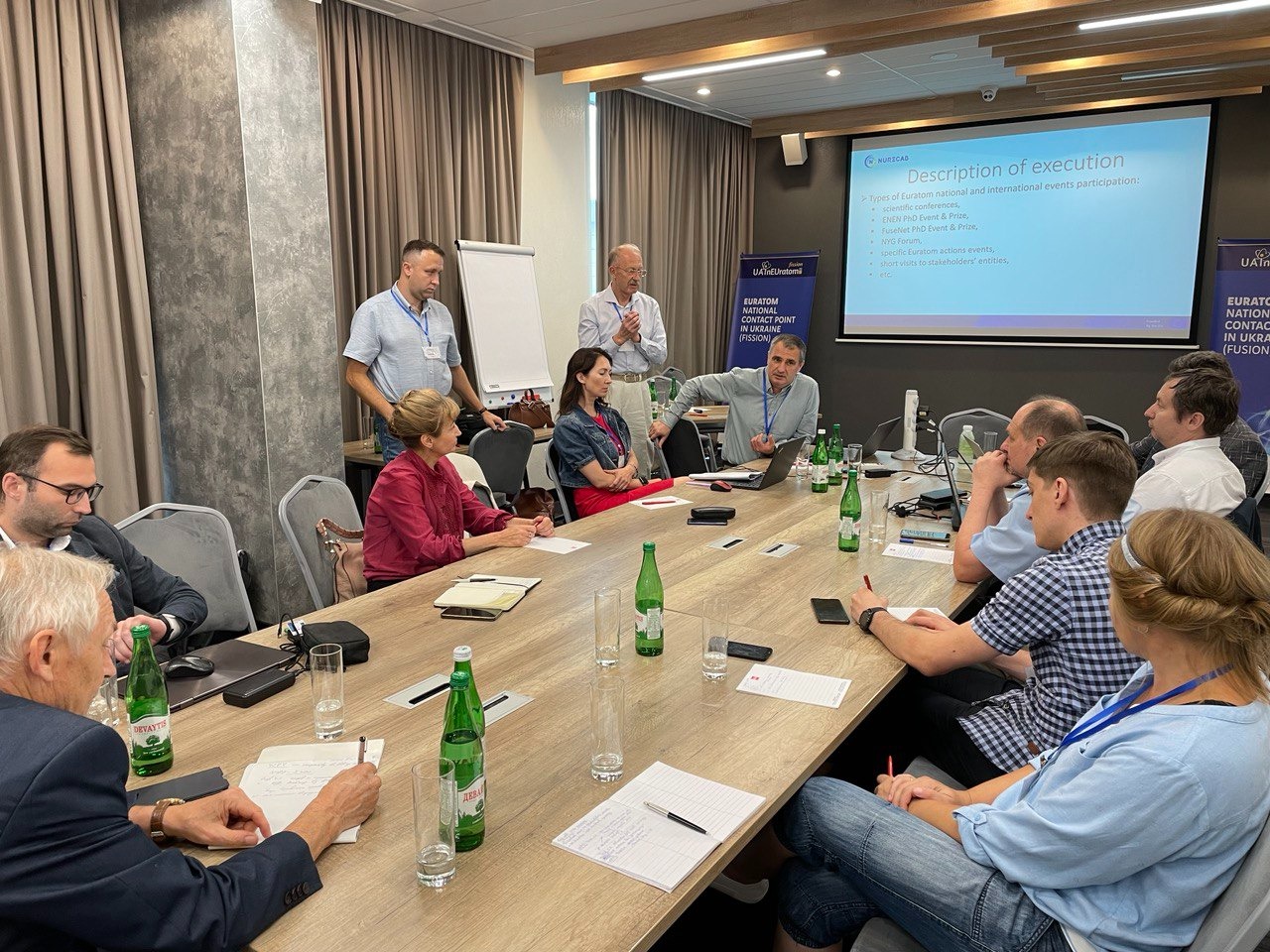
Sergii Pugach, PhD in physics and mathematics, Head of the marketing research sector of technology transfer and commercialisation of scientific and technical developments of the NSC KIPT, which is the National Contact Point of Euratom (Fission) in Ukraine, and a representative of the NURECAB Project coordinator organisation, spoke about the successful coordination of the project, as well as the path to the Horizon Europe Programme.
The experience of the participation of the NSC KIPT in the framework programmes of the European Union began with the Seventh Programme, 2010. It was the writing of a project application for a call in the area of solar energy, in particular photovoltaics, as part of a consortium where the institute acted as a partner. The team then failed to submit a successful proposal. However, already in the next Horizon 2020, the organisation as part of the consortium managed to win a call aimed at combating mycotoxins and reducing crop losses associated with mycotoxin infection – and receive funding.
In general, NSC KIPT participated in Horizon Europe projects as a partner, administrative and financial manager, technical executor, as well as project coordinator. The activities were carried out according to the following components: European Innovation Council, Research infrastructures, in addition, there is a successful experience in the research and training programme EURATOM.
So, returning to the NURECAB Project, it should be noted that all previous experience allowed the institute to approach Horizon Europe more confidently. The institution was looking for new directions of international cooperation and new sources of funding for scientific research and innovation. Therefore, together with those partners with whom they already had experience of cooperation, they discussed and decided on participation. This is how the idea arose to prepare a project proposal and submit an application for the call: EURATOM-2024-UKRAINIAN-IBA Education, training, capacity building and networking actions to strengthen Ukrainian and EU nuclear research.
Since NSC KIPT and Sergii Pugach personally had extensive and diverse experience in forming a project proposal, both successful and unsuccessful, as part of a consortium in the role of a partner and as a coordinator, difficulties in the process of finding calls, selecting partners, registration and submitting an application did not arise at all. Unless it took a lot of time and constant attention to this process, as Mr. Pugach notes. Also, the team did not apply for help in writing a grant application. However, previously, employees of the institute participated in a large number of trainings and webinars on writing project proposals at both the national and EC levels.
Regarding the idea of the project, the representative of the institute emphasised that one’s own ideas usually become part of the project, that is, a separate task of it, but are not dominant and do not have a global impact from the point of view of project implementation. In other words, one’s own ideas were integrated into the general outlines of the project.
NURECAB had a programme-defined list of mandatory consortium participants and those whom NSC KIPT added based on the tasks or expected results of the call. The project consortium consists of the already mentioned coordinator and participants: KhNU named after V.N. Karazin, NTU of Ukraine «KPI named after. Igor Sikorskyi», KNU named after. Taras Shevchenko, NTU Kharkiv Polytechnic Institute, NU Odesa Polytechnic, Ukrainian Nuclear Society, JSC National Atomic Energy Generating Company “Energoatom” and the European Network of Nuclear Education.
Sergii Pugach noted that excellent communication was established with all participants, but, taking into account the security conditions, the holding of events depends on the tasks: “We hold some events online, others in a hybrid format, depending on which audience we are targeting. If we are talking about physical events, then the most convenient for this is the city of Kyiv to gather a certain audience, so we hold most of them here”.
As for the process of concluding the Grant Agreement – in general, there were no difficulties. Unless the process was complicated by the fact that the participants were both beneficiaries and third parties, accordingly, in addition to the Grant Agreement, additional contracts were signed between beneficiaries and third parties in order to make payments within the project.
Real quests arose already during the implementation of the project, in particular, on the issue of mobility, especially border crossing for the participation of young scientists or students in scientific events. They were resolved jointly in cooperation between scientific institutions, the Ministry of Education and Science of Ukraine and the State Border Guard Service of Ukraine. Other difficulties are on budgeting partners. Each institution has its own order, administrative and financial mechanisms, which partially slowed down the processes. So, advice from the head of the coordinating institution of the project: be sure to take this issue into account.
The impact of the results of the implementation of the NURECAB on improving the quality of life and achieving certain EU goals
NURECAB addresses EU targets related to zero emissions by 2050 and with certain intermediate targets along these lines. It is about nuclear and thermonuclear energy. The project is directly devoted to two questions:
- training of young specialists, because Europe feels a shortage of such specialists and actively trains such specialists, involving young people in nuclear energy. In this sense, there is a lot of experience and experience in Ukraine;
- integrating scientific research into the European research plane. This is Ukraine’s experience in the nuclear industry, which needs to be combined with the European one. And all this – for the construction of new power reactors: both fission and fusion.
Summing up his story, Sergii Pugach said that he definitely plans to apply for HE calls in future: “As a representative of a scientific institution, I directly set myself the task of involving my institution in various areas of Horizon Europe, and as an NCP that works at the national level, accordingly, other organisations and their representatives should be included into the Programme”.
Reference:
NURECAB
EU-UA Nuclear Research and Education Capacity Building
Grant agreement ID: 101173510
Duration of the project: 1 September 2024 – 31 August 2026
Funded under: Euratom Research and Training Programme (EURATOM)
Coordinated by: NATIONAL SCIENCE CENTER KHARKOV INSTITUTE OF PHYSICS AND TECHNOLOGY (Ukraine)
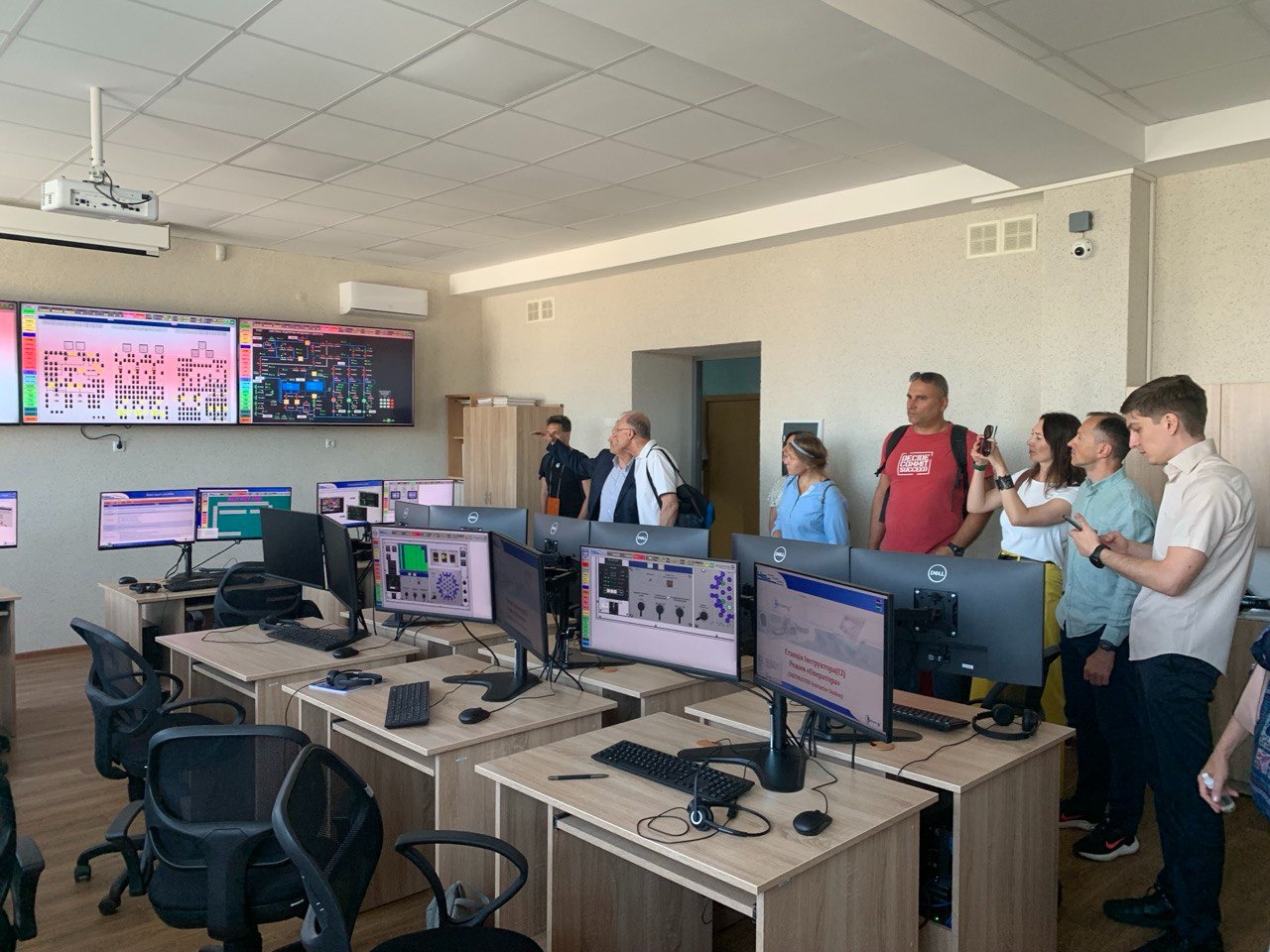
📎Photos taken from the website of the National Academy of Sciences of Ukraine.