Differences in approaches in Cluster 5 and the EU Mission Climate calls: representatives of Horizon Europe Office in Ukraine took part in a webinar organised by the NCP Climate, Energy and Mobility
On May 26, a webinar dedicated to the preparation and submission of project proposals for participation in Horizon Europe calls was held. This was the regular event organised by the National Contact Point for the Climate, Energy and Mobility, based at the Ukrainian State University of Science and Technology (Dnipro). Representatives of Horizon Europe Office in Ukraine, National Research Foundation of Ukraine, took part in the event.
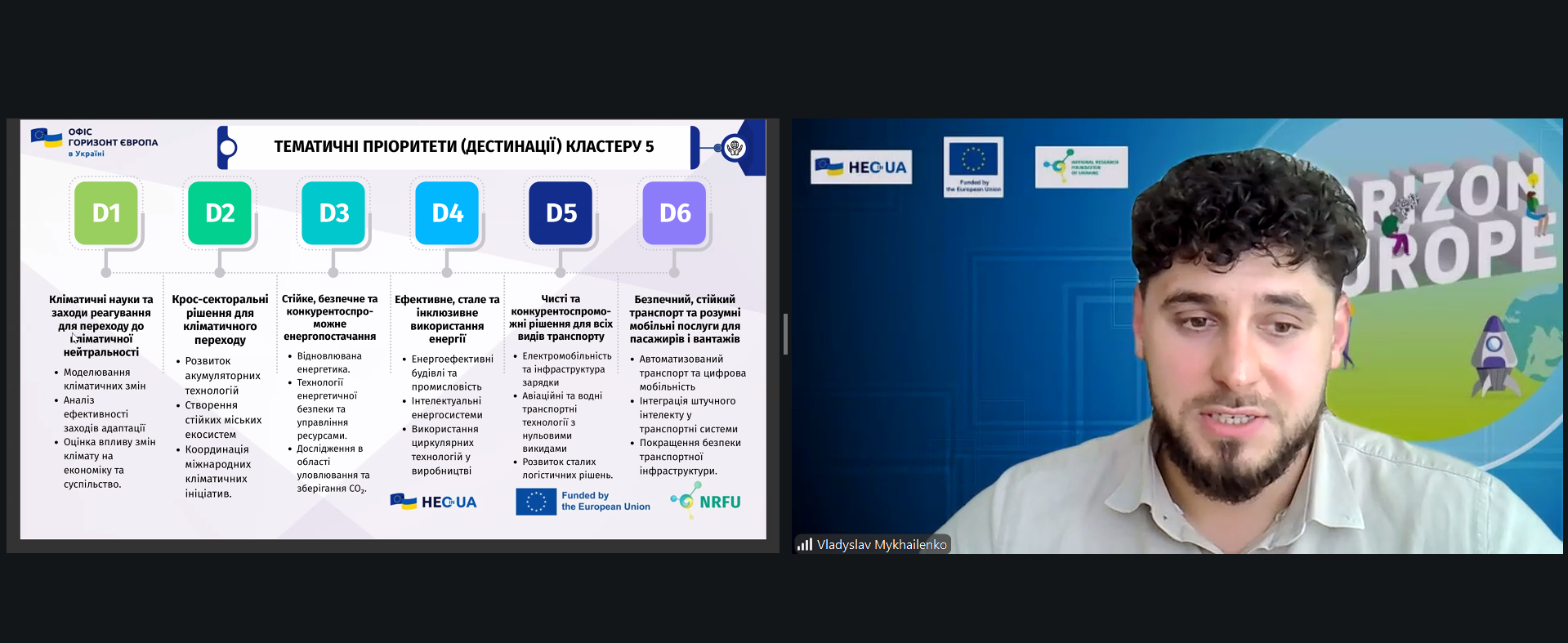
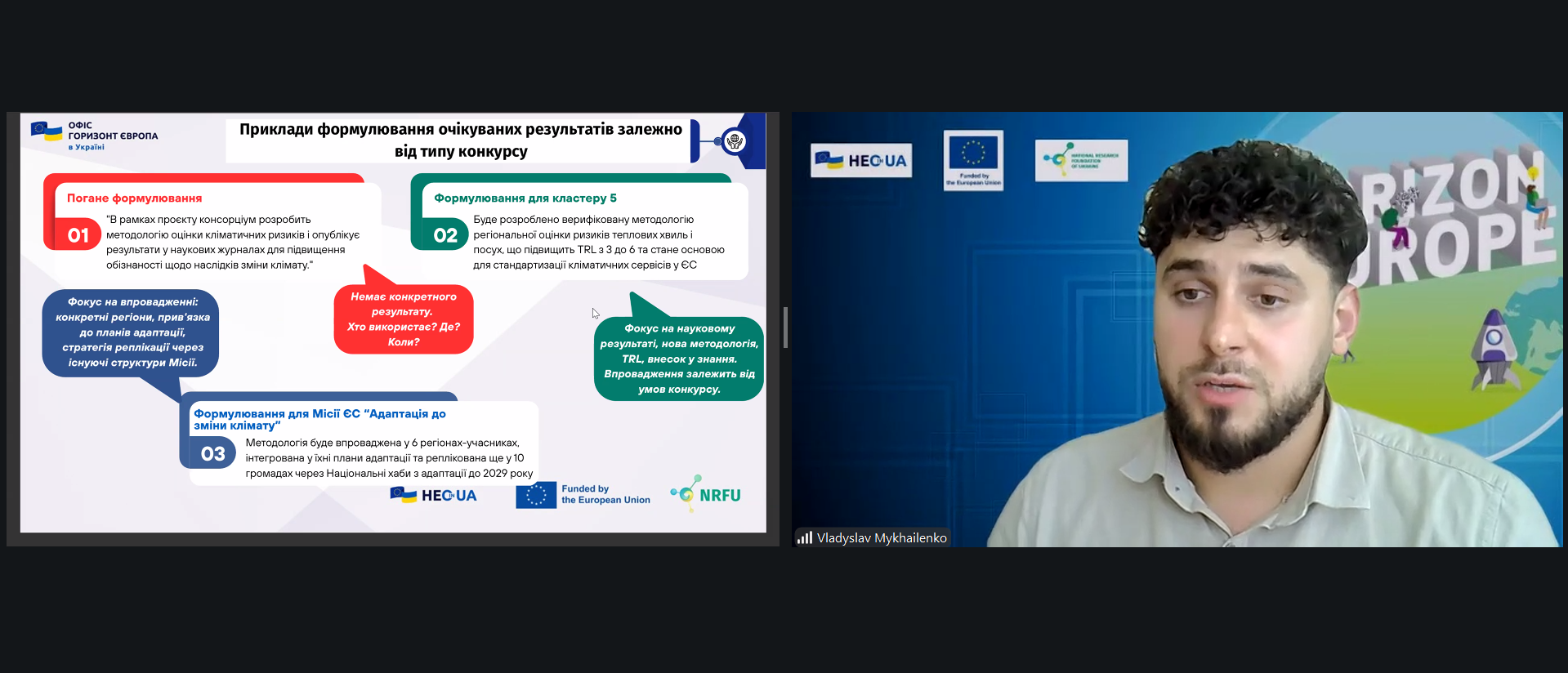
Vladyslav Mykhailenko, a leading officer of the Office, spoke in detail about the Programme’s opportunities in the area of environmental conservation, particularly within Cluster 5 Climate, Energy and Mobility and the EU Mission Adaptation to Climate Change. During his presentation, he focused primarily on the practical aspects of developing project ideas and the differences in approaches to preparing project proposals for participation in calls within the aforementioned components of the Programme.
In particular, the expert noted that Cluster 5 calls are primarily focused on research and innovation, technological development, technology readiness level (TRL), scientific novelty, and the delivery of certain technological or scientific outcomes. At the same time, EU Missions are guided by a different logic: they are geared towards achieving a systemic societal impact through a combination of research, policies, financial instruments, demonstration projects and the active involvement of public authorities, communities and business.
Special attention was paid to opportunities for Ukrainian organisations, in particular: participation in calls related to enhancing the climate resilience of regions, climate risk management, the development of green infrastructure, and the implementation of projects that can contribute to the recovery of areas of Ukraine affected by the war. The speaker also provided participants with examples of current calls for proposals and explained how to correctly align one’s own idea with the logic of a specific call.
Other topics covered during the webinar included:
- the success story of the Ukrainian State University of Science and Technology in the Programme – the PRECEPT project
- the logic and structure of a successful Horizon Europe project proposal
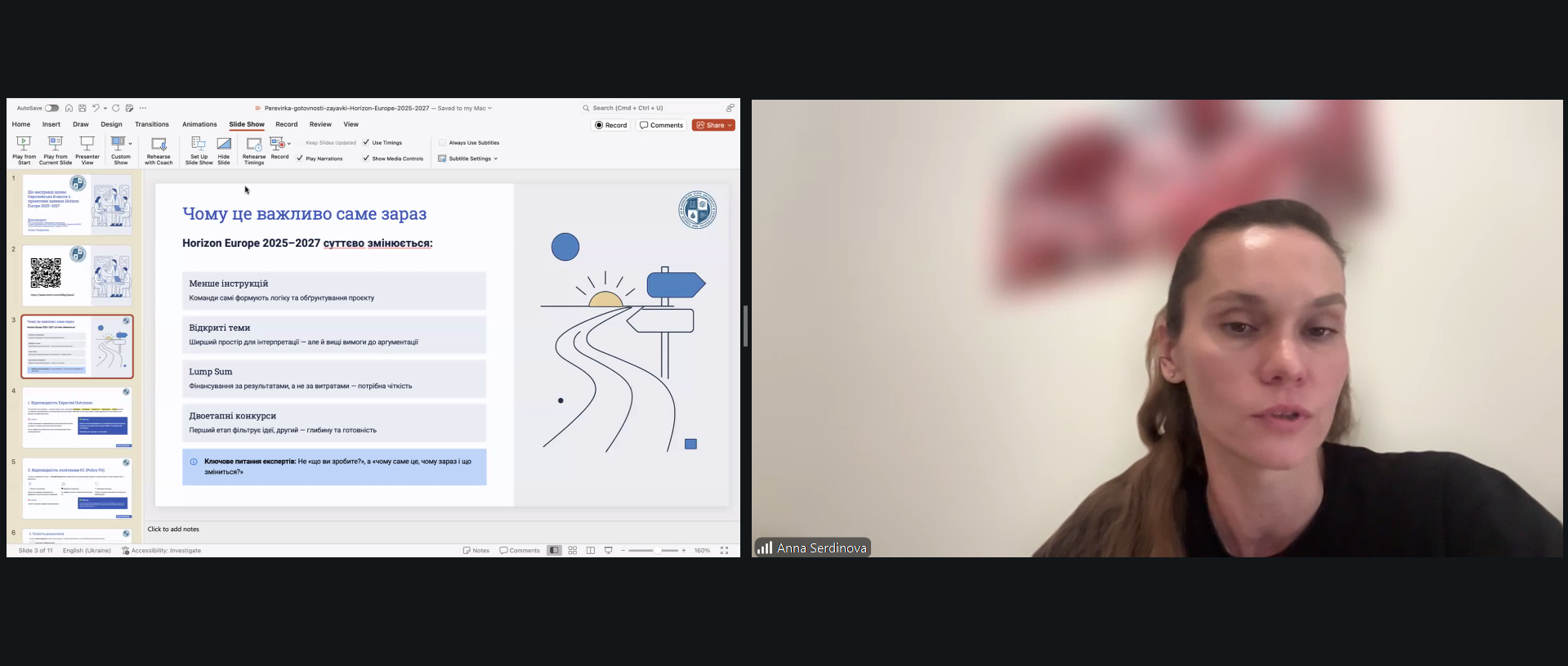
- what the European Commission looks for when reviewing and evaluating project proposals.
Vladyslav Danishevskyi, the Director of the Institute of the ‘Dnipro State Academy of Civil Engineering and Architecture’ at the Ukrainian State University of Science and Technology, NCP Climate, Energy and Mobility, opened with welcome speech and moderated the event.