


Connecting Voices: LUKE Webinar Brings Together Ukrainian and European Experts to Discuss Science Diplomacy


We support the European Research Area aimed at creating a single, borderless market for research, innovation and technology in the EU.
On 5 November 2026, the LUKE project hosted the interactive online workshop “Connecting Voices: Building Ukraine’s Science Diplomacy Ecosystem in Europe”. The event brought together 34 participants from Ukraine, UK, Greece, Germany, Romania, Bulgaria and other Eastern European countries providing a platform for Ukrainian and European experts to exchange perspectives on the development of Ukraine’s science diplomacy ecosystem and its integration into the broader European research and academic landscape.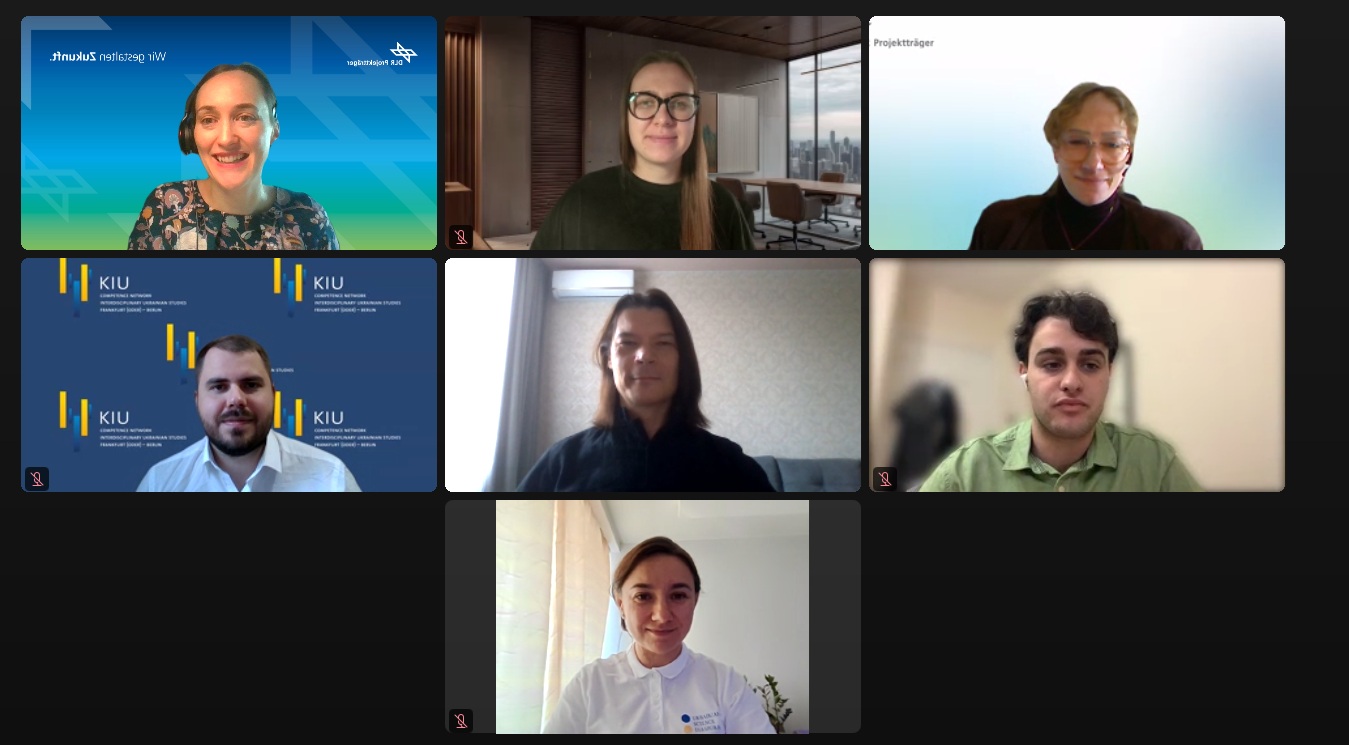
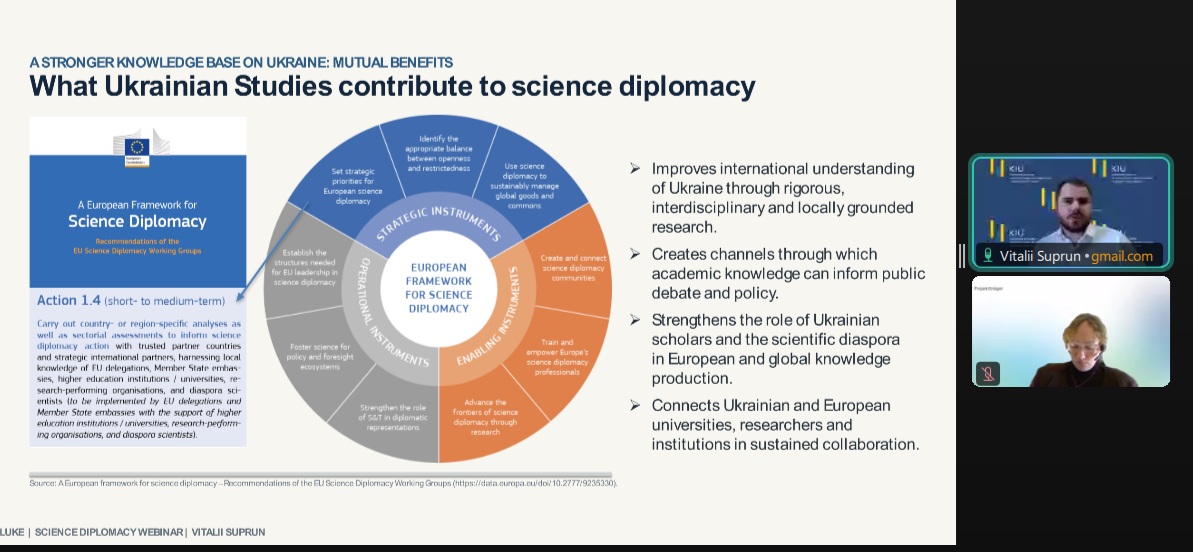
The workshop explored the contribution of academic networks, Ukrainian Studies, European science diplomacy initiatives and scientific diaspora communities to fostering sustainable connections between Ukraine and Europe. Discussions focused on opportunities for strengthening institutional cooperation, enhancing the visibility of Ukrainian research and expertise in European science diplomacy debates, and creating new channels for engagement among researchers, policymakers and diaspora communities.
Key insights and outcomes
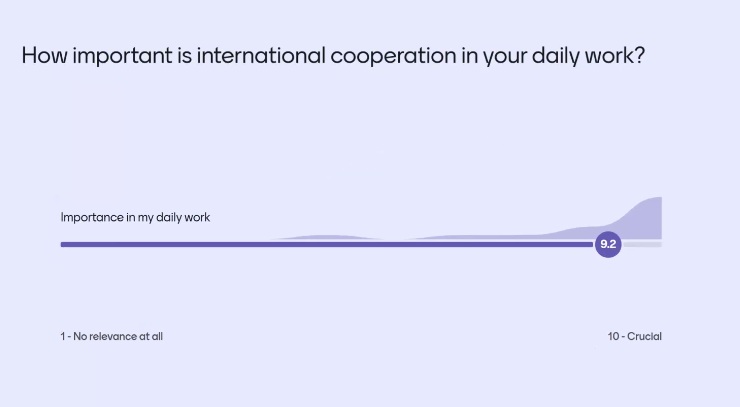
Feedback collected from participants highlighted the importance of international cooperation in their professional activities, which received an average rating of 9.2 out of 10. This assessment underlined the central role of international engagement in contemporary academic and research environments.
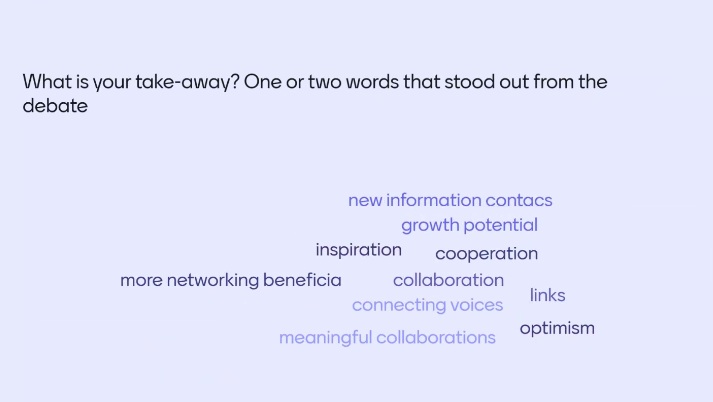
Participants also identified connection, collaboration, networking, growth potential and optimism as key themes emerging from the workshop. These reflections pointed to a strong interest in further developing opportunities for interaction and cooperation across academic and institutional networks.
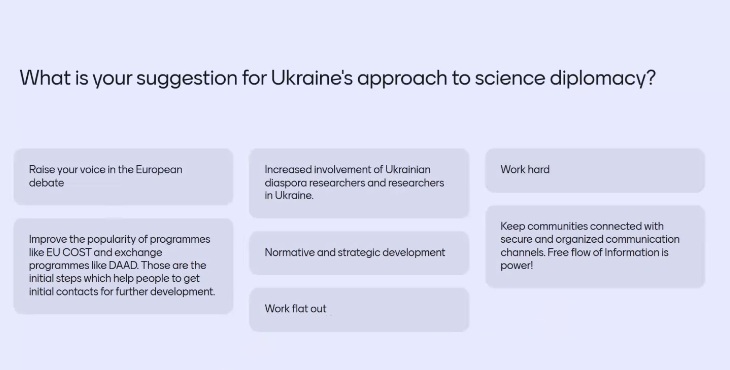
The discussion also generated a number of recommendations for advancing Ukraine’s approach to science diplomacy. These included strengthening Ukraine’s representation and visibility in European science policy discussions, fostering closer engagement with researchers from the Ukrainian scientific diaspora, maintaining sustainable and secure communication channels between research communities, and promoting the free exchange of knowledge and information.
A key conclusion of the workshop was the need for more structured opportunities for researchers, policymakers and diaspora representatives to connect, identify shared priorities and develop long-term partnerships. Such platforms can play an important role in translating professional contacts into meaningful cooperation and strengthening Ukraine’s presence within the European science diplomacy landscape.
Continuing the dialogue through LUKE
The workshop forms part of the LUKE project’s broader efforts to strengthen connections between Ukrainian and European academic communities and contribute to the development of a more interconnected Ukrainian science diplomacy ecosystem in Europe.
By facilitating dialogue, promoting networking and supporting collaboration among relevant stakeholders, LUKE seeks to create opportunities for sustained engagement and new partnerships that reinforce Ukraine’s position in the European research and science diplomacy landscape.
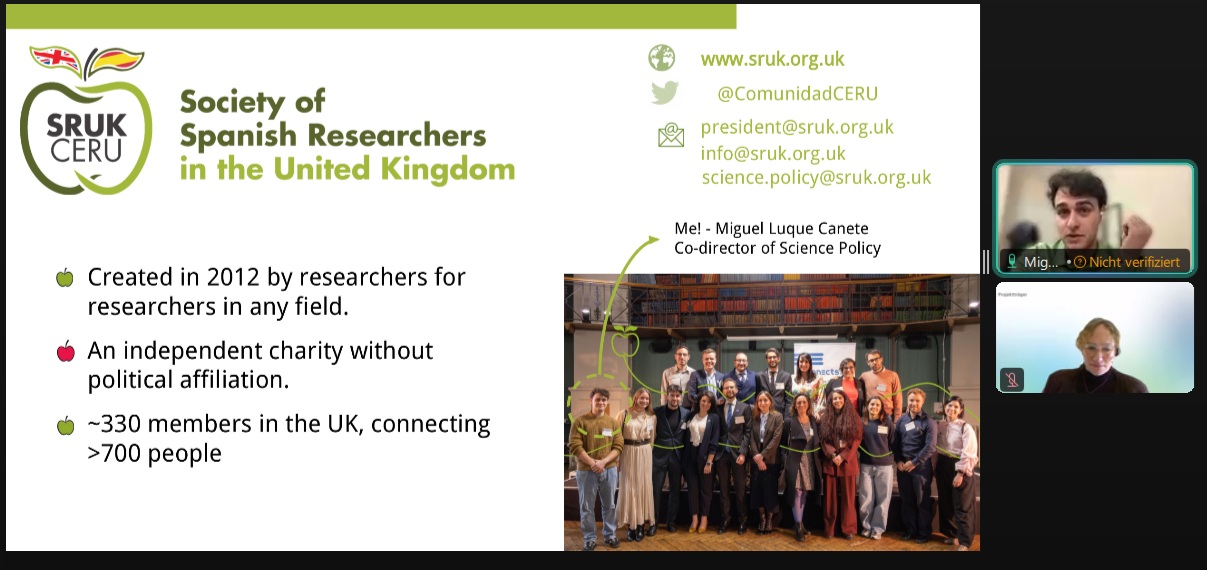
The LUKE project would like to thank Igor Lyman, Vitalii Suprun, Stella Reschke and Miguel Luque Canete for their expert contributions, as well as Henriette Kirch and Yevheniia Polishchuk for moderating and facilitating the discussion.
We are grateful to all participants for their active engagement and valuable contributions to the exchange.
This workshop is part of the LUKE project, funded by the European Union (Grant Agreement 101188315).
Funded by the European Union. Views and opinions expressed are however those of the author(s) only and do not necessarily reflect those of the European Union or European Research Executive Agency (REA). Neither the European Union nor the granting authority can be held responsible for them.