The EC held Horizon Europe Proposal Writing Camp for Ukrainian participants
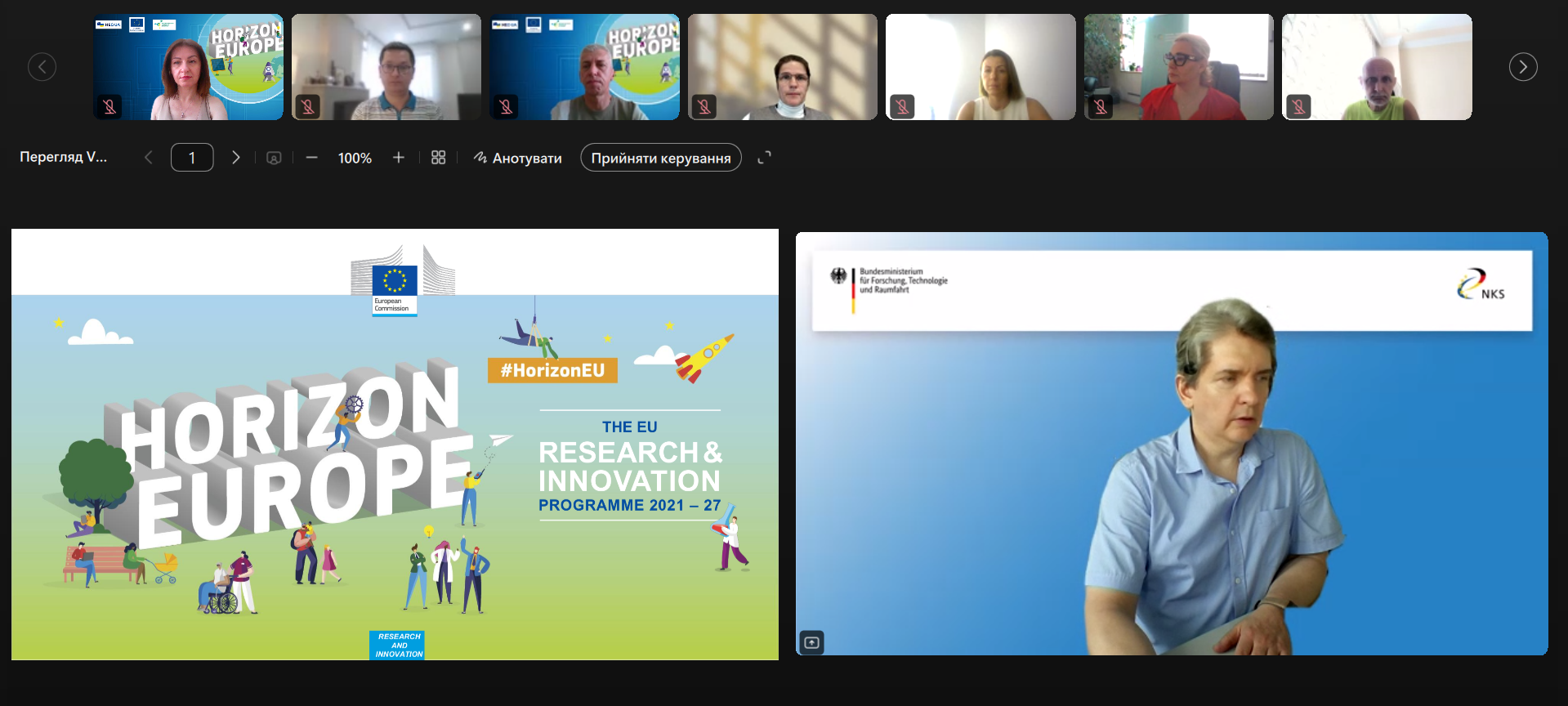
On July 27, 28 and 31, the Horizon Europe Proposal Writing Camp for Ukraine took place, organised for participants from Ukraine by experts from the European Commission’s Eastern Partnership* initiative. The aim of the three-day event was to develop skills in drafting successful applications to be submitted by Ukrainian applicants for Horizon Europe Work Programme 2026-2027 calls.
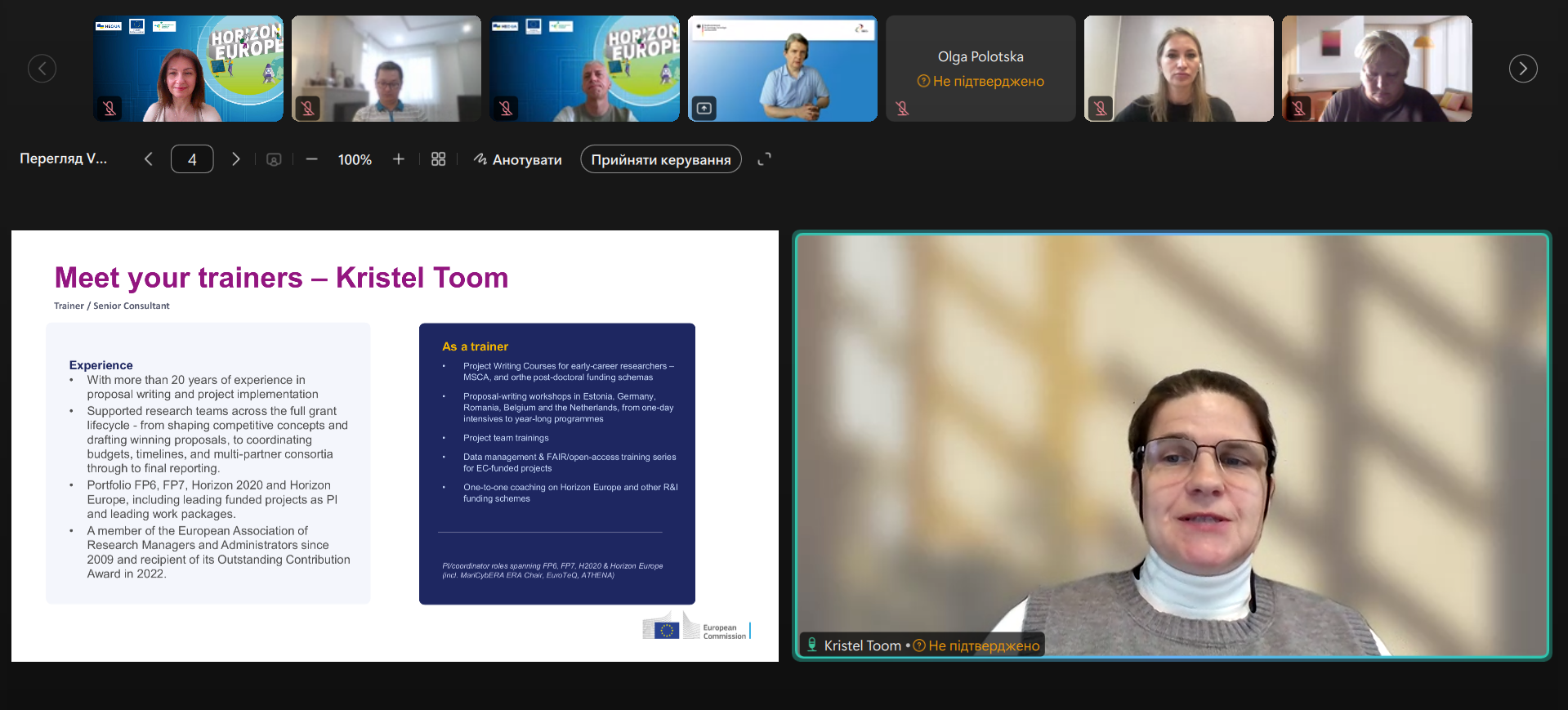
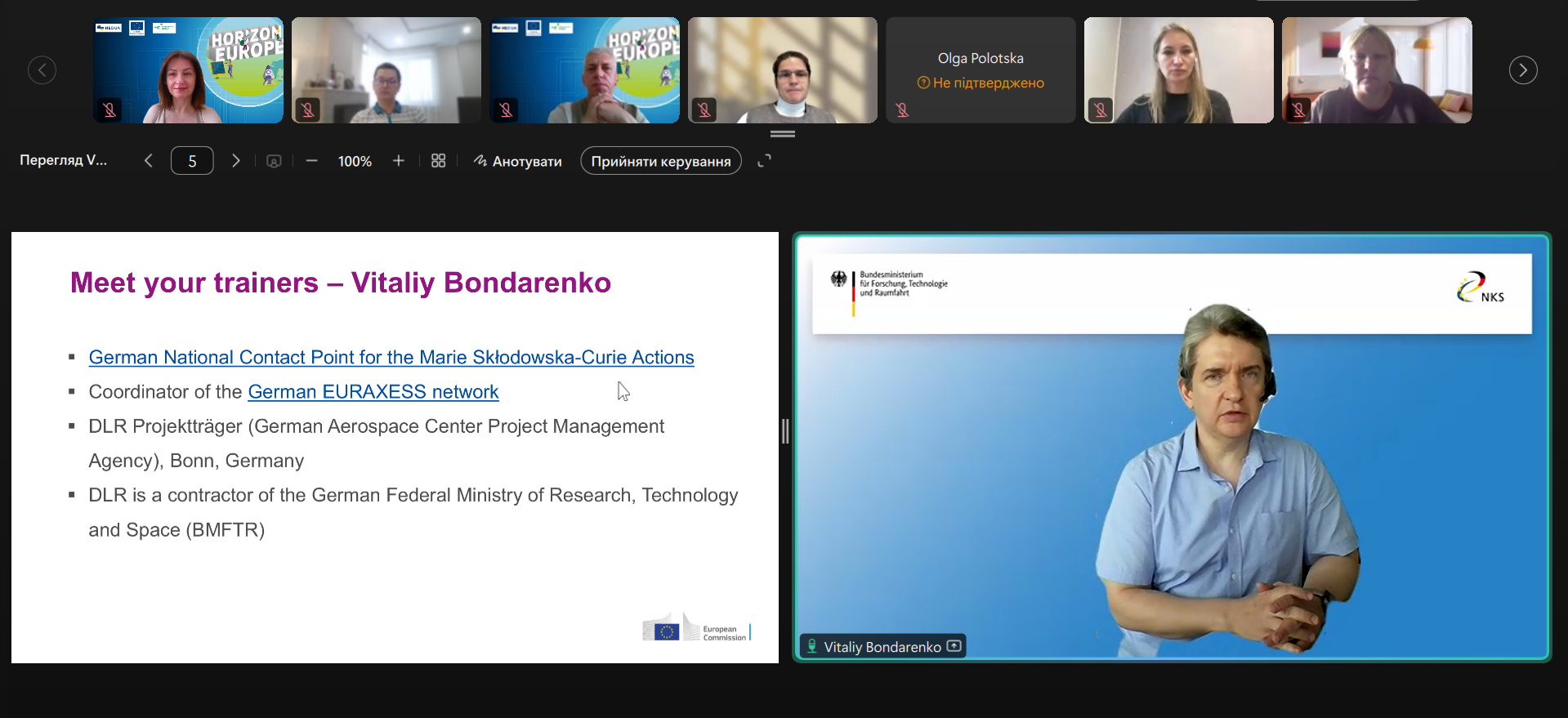
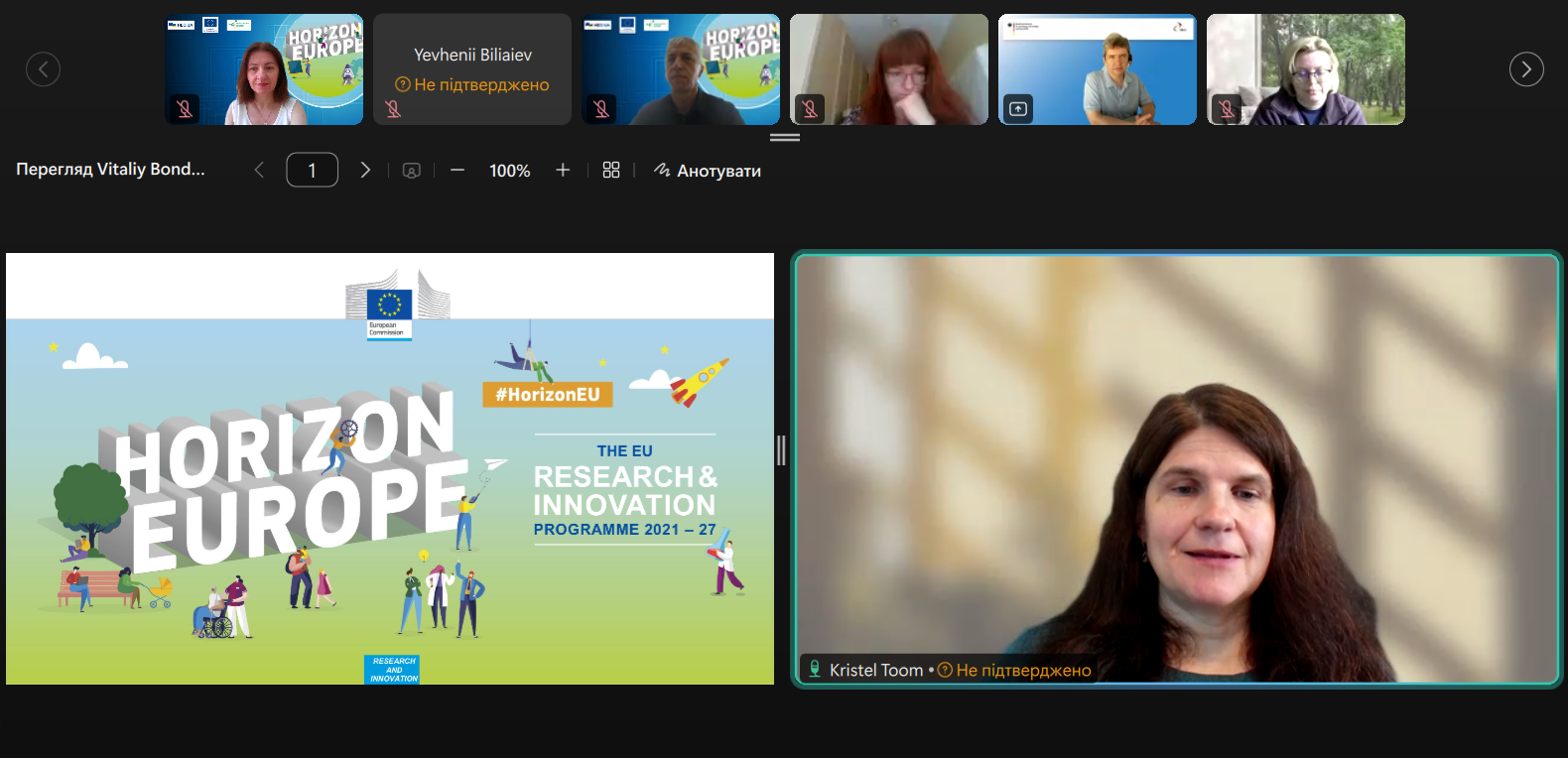
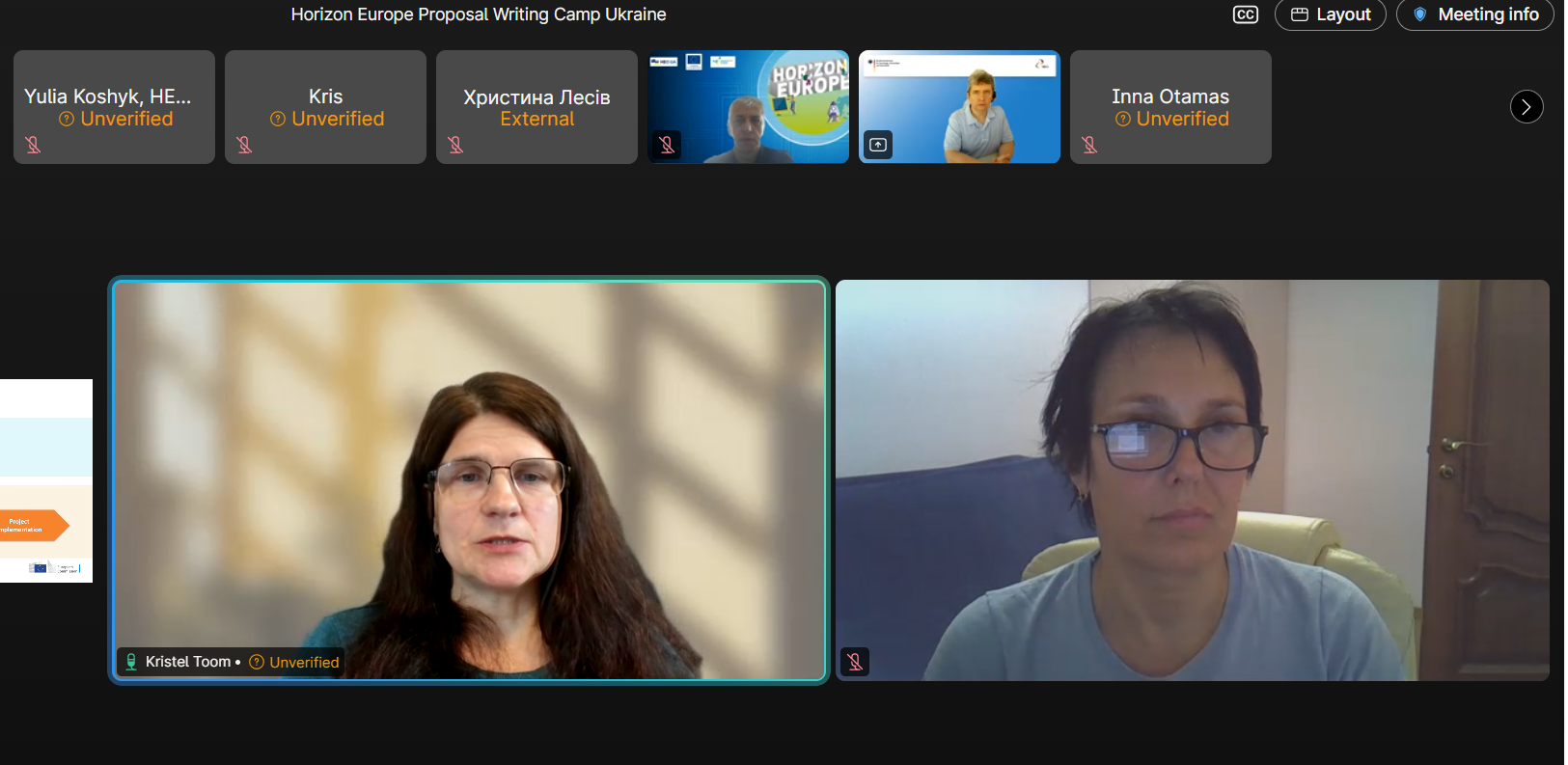
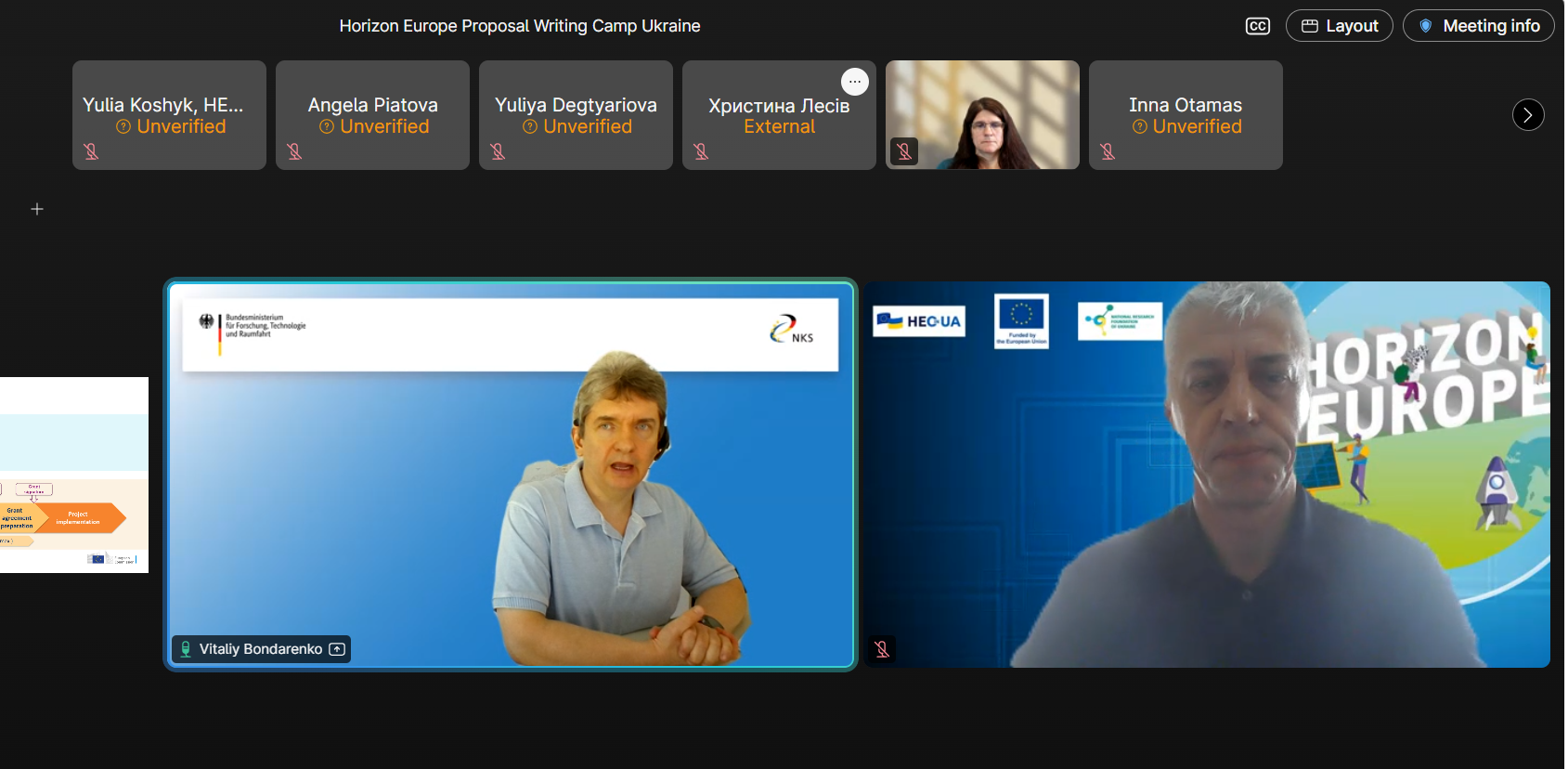
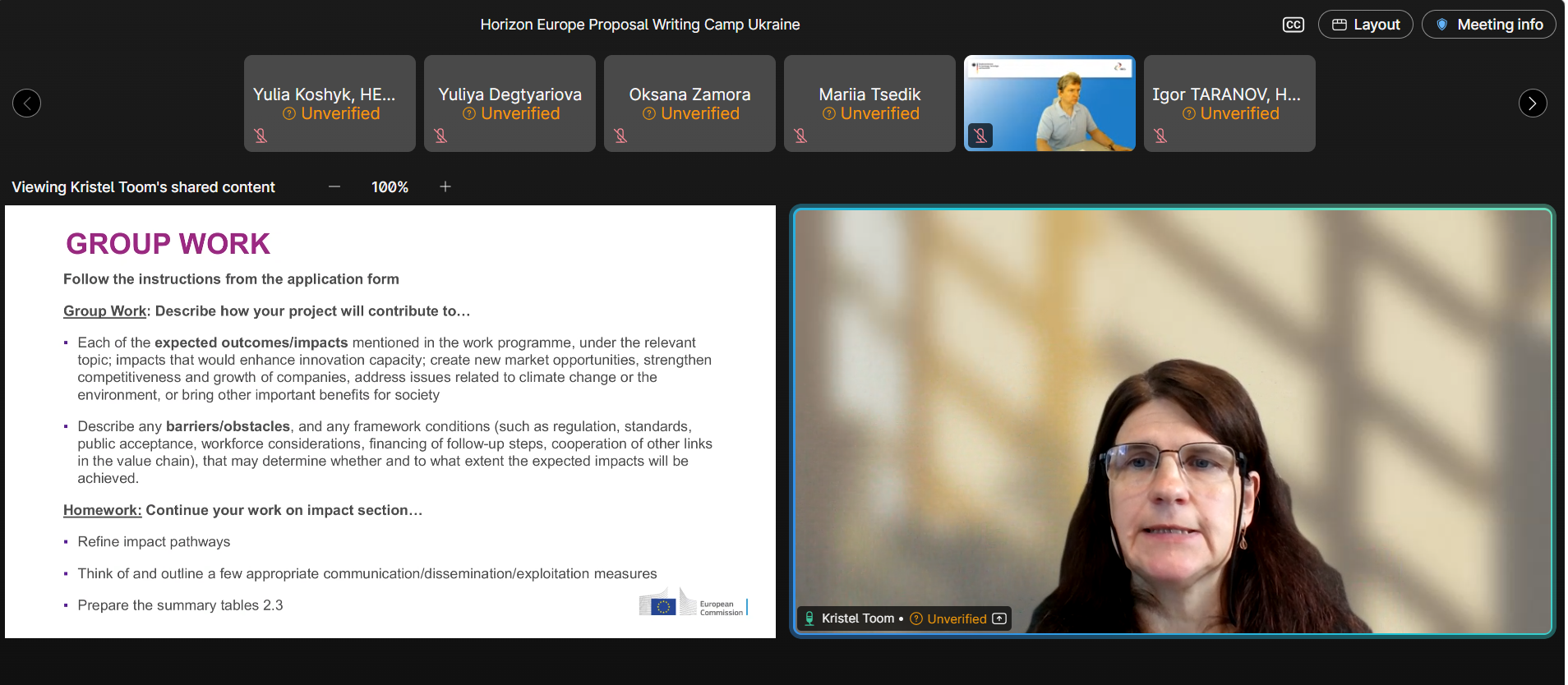
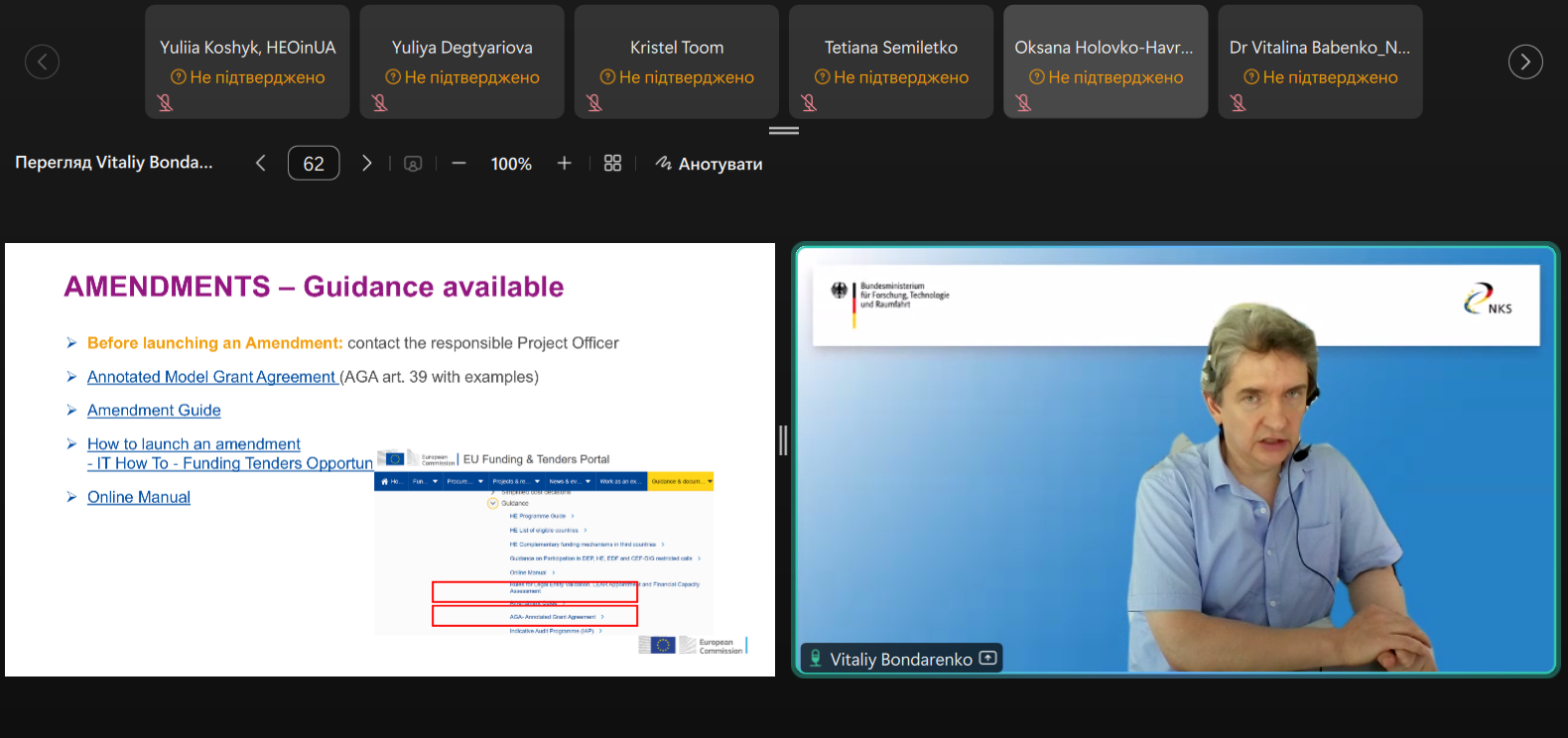
The trainers were Kristel Toom, a project manager and specialist in project proposal preparation, and coordinator of projects under FP6, FP7, Horizon 2020 and Horizon Europe, and Vitaliy Bondarenko, a German Marie Skłodowska-Curie Actions NCP, coordinator of the German EURAXESS Network, and an expert at the Project Management Agency of the German Aerospace Centre, the German Federal Ministry of Research, Technology and the Universe.
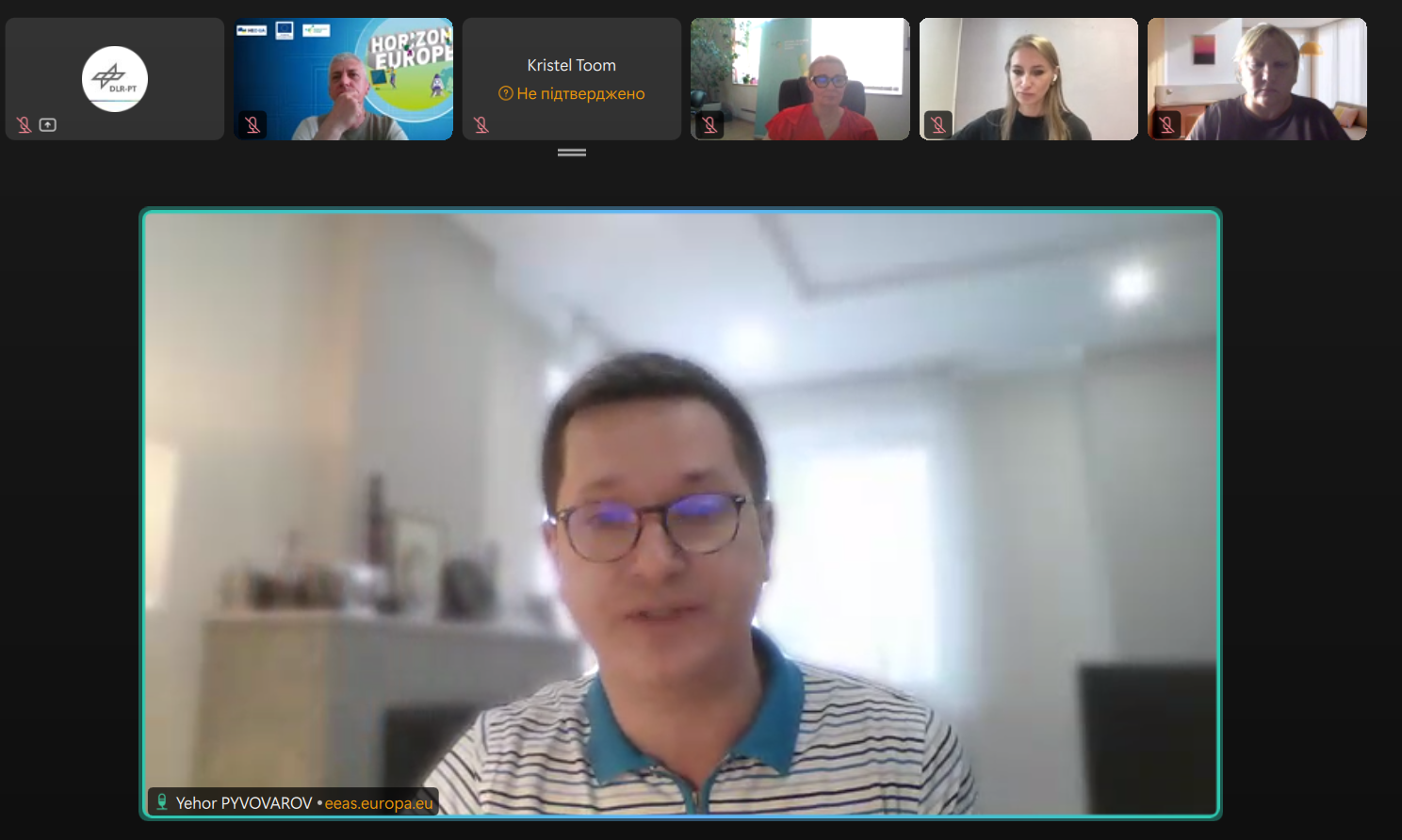
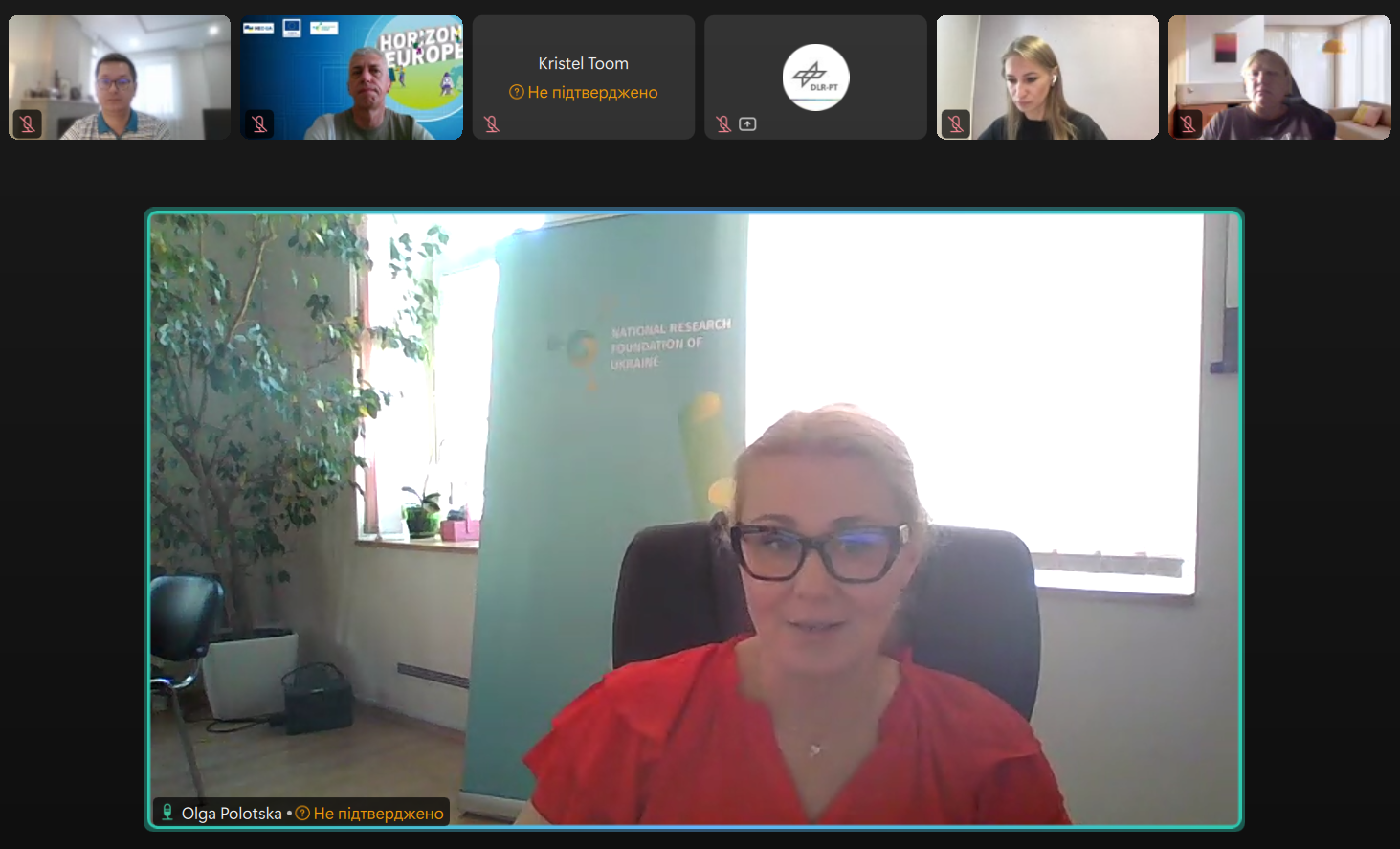
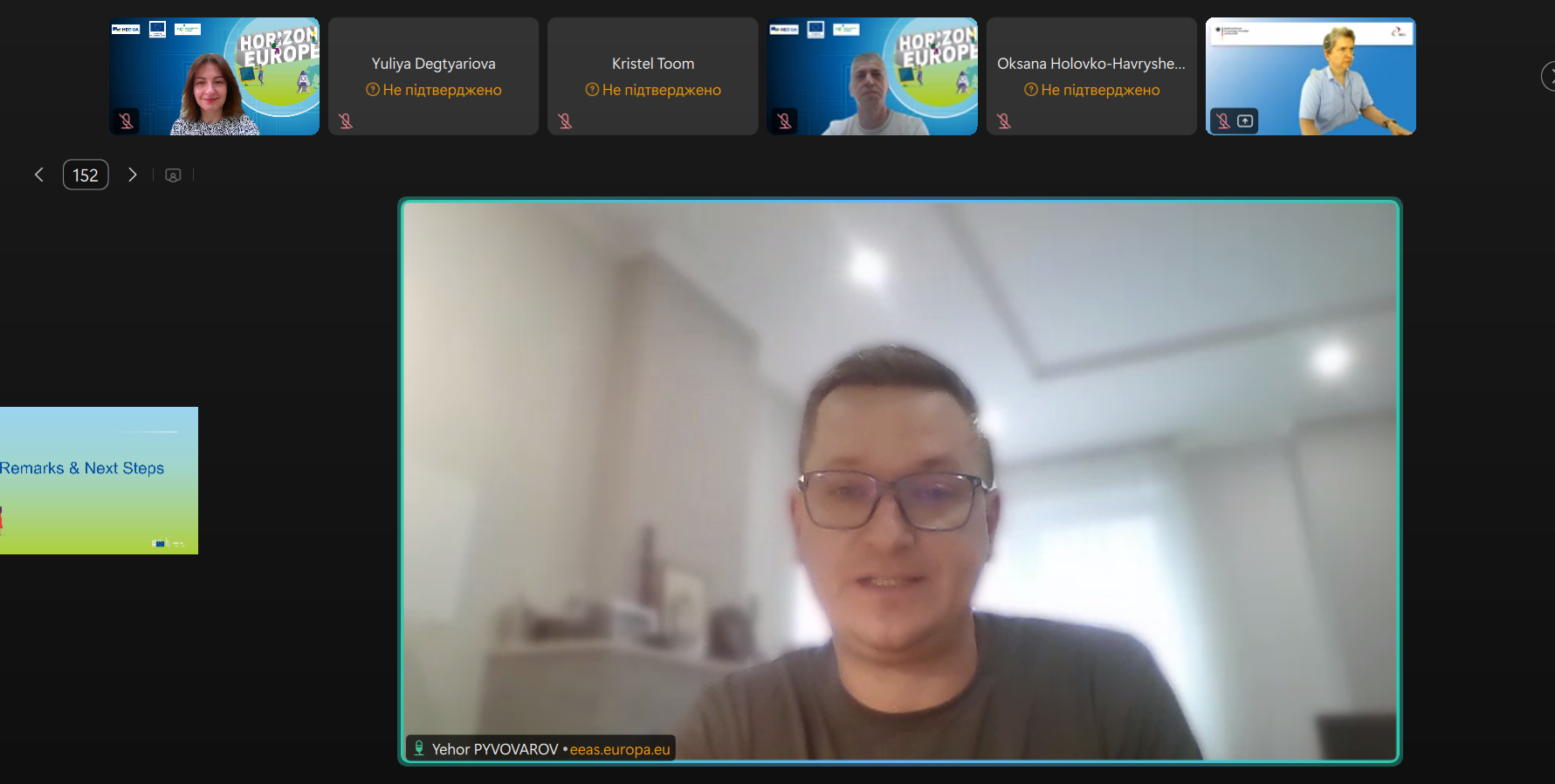
The first day of the training, 27 July, was opened by Yehor Pyvovarov, an expert on science and innovation policy at the EU Delegation to Ukraine, and Olga Polotska, Executive Director of the National Research Foundation of Ukraine. They welcomed the participants and expressed their sincere gratitude to the organisers – the European Commission’s experts who permanently support Ukrainian scientists, researchers and innovators.
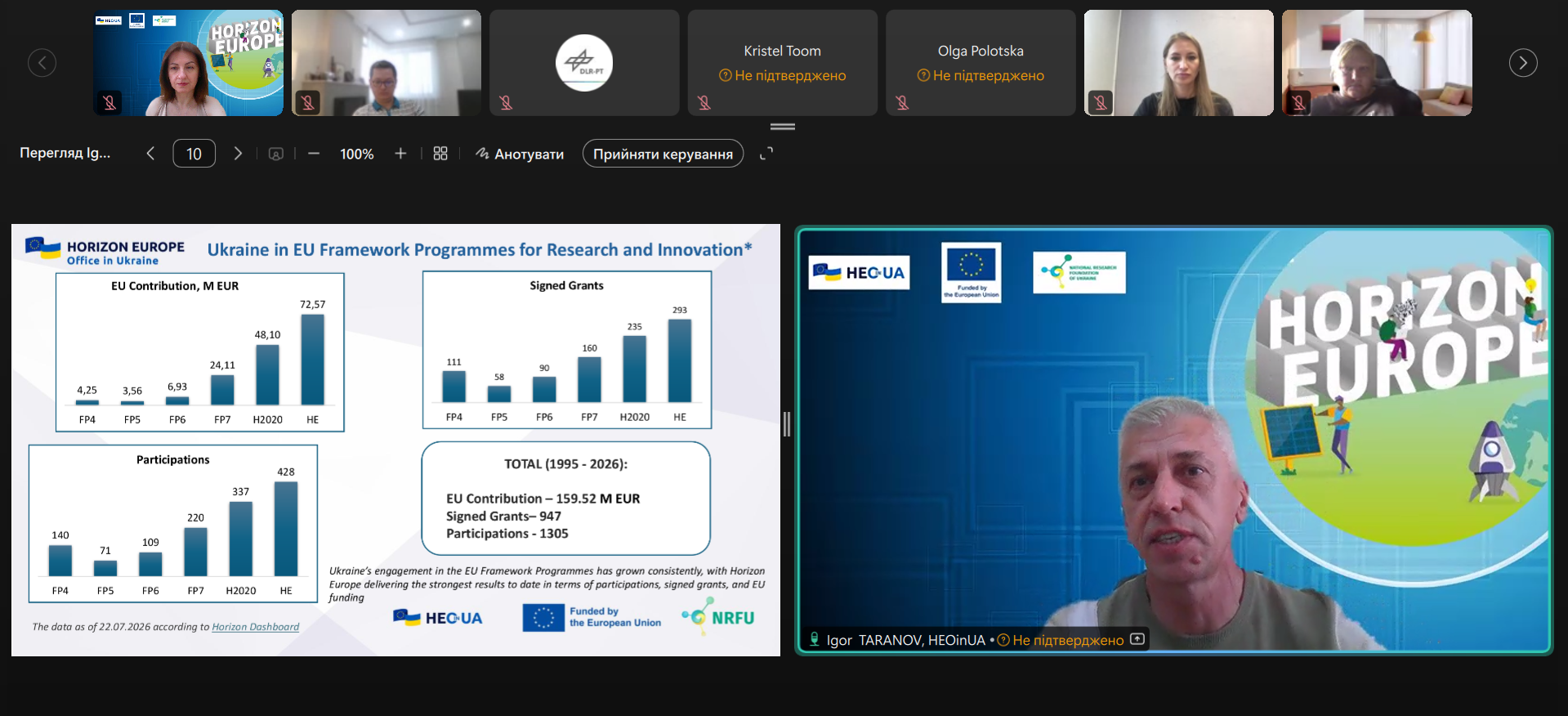
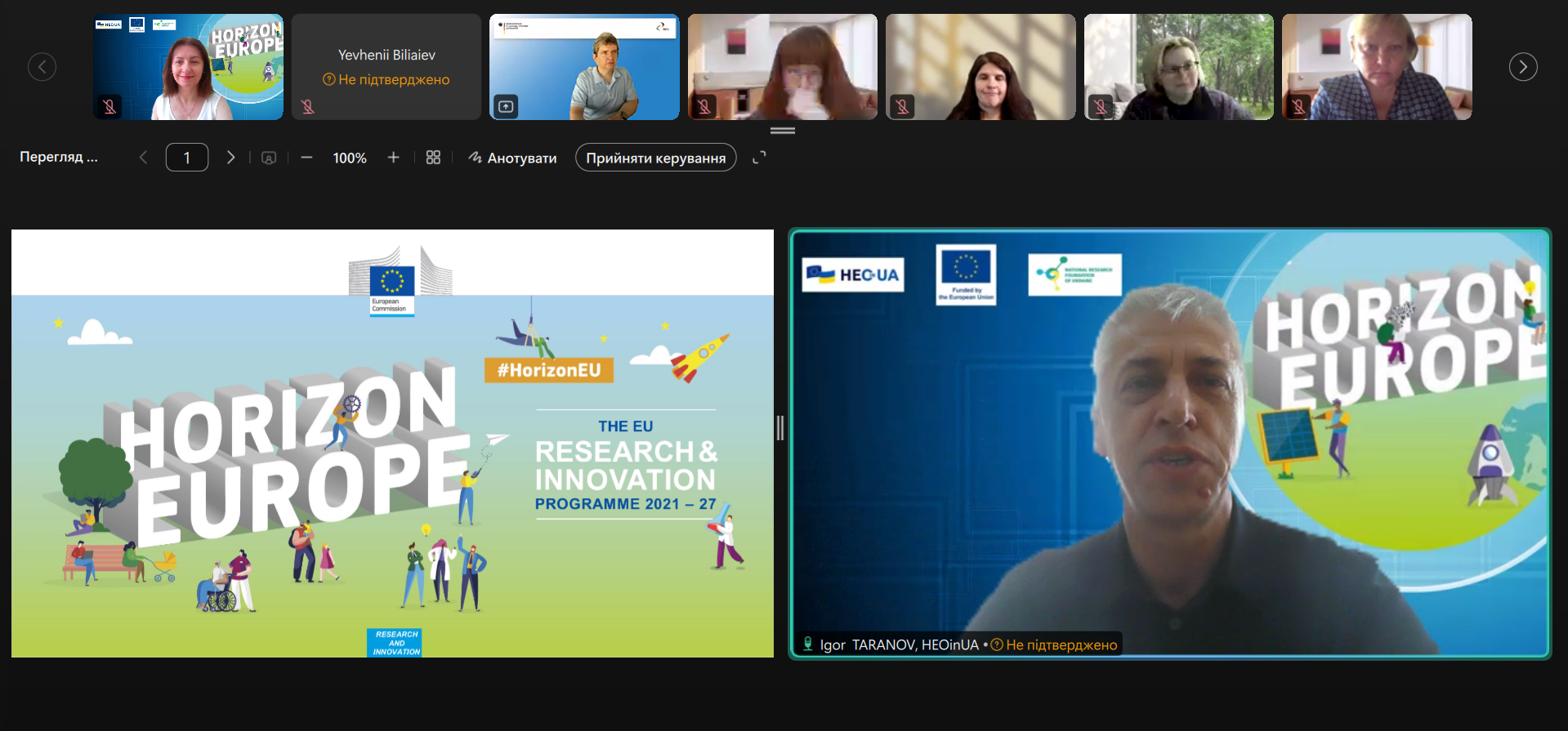
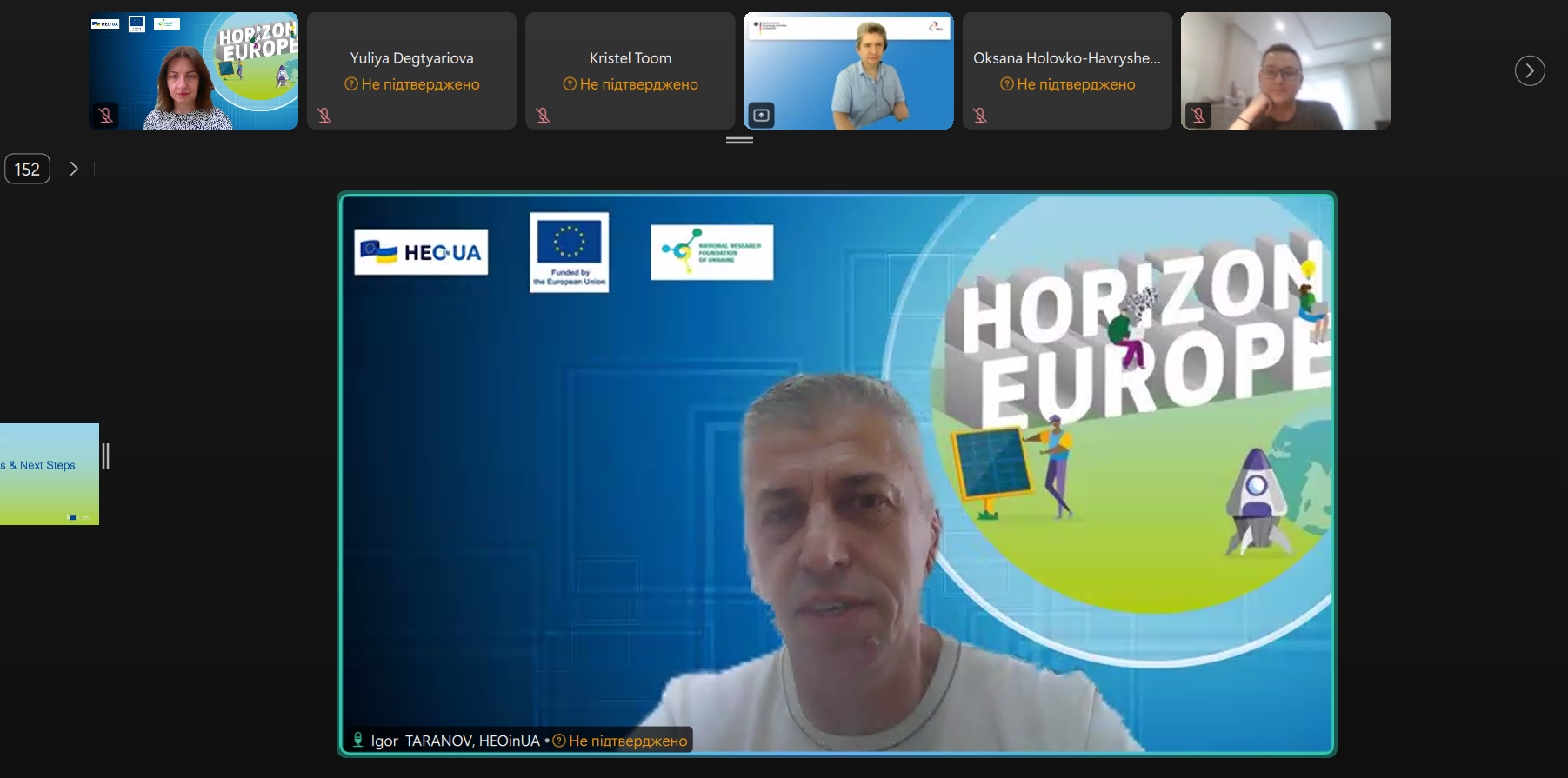
Igor Taranov, Head of Horizon Europe Office in Ukraine, NRFU, gave a presentation on Ukraine’s participation in the Horizon Europe Programme. The Head of the Office provided a clear overview of the steadily rising participation figures in the EU Framework programmes, particularly in specific areas. He noted that participation in Horizon Europe is currently yielding the best results in terms of the number of participants, grant agreements signed and the volume of EU funding. Among other things, the speaker spoke about Ukrainian project coordinators for Horizon Europe.
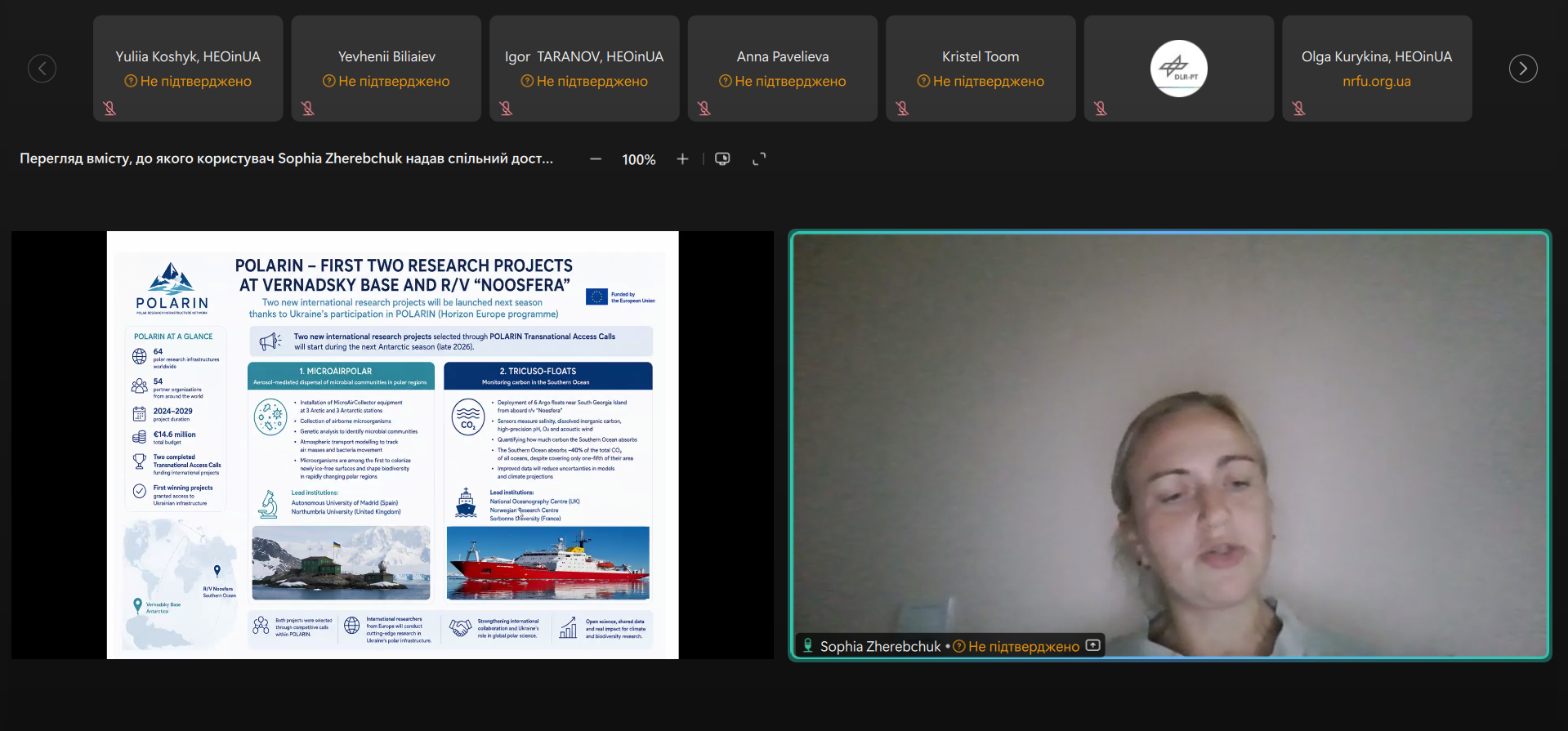
Participants were also introduced to the success story of the POLARIN project (Polar Research Infrastructure Network) under the Horizon Europe, presented by Sofiia Zherebchuk, a senior researcher of the National Antarctic Scientific Centre of Ukraine.
Over the course of three days, participants learnt about the current Horizon Europe Work Programme 2026-2027 calls, how to use the EU Funding and Tenders Portal, interpreting call texts, structuring and drafting project proposals, the logic behind evaluation and scoring, preparing work packages and budgets, the grant agreement, project management (communication, dissemination, exploitation of results), and the structure and distribution of roles within a consortium.
Common mistakes made by applicants at all staps of project proposal preparation were analysed in detail, and useful practical advice was provided to Ukrainian applicants on how to avoid or correct them.
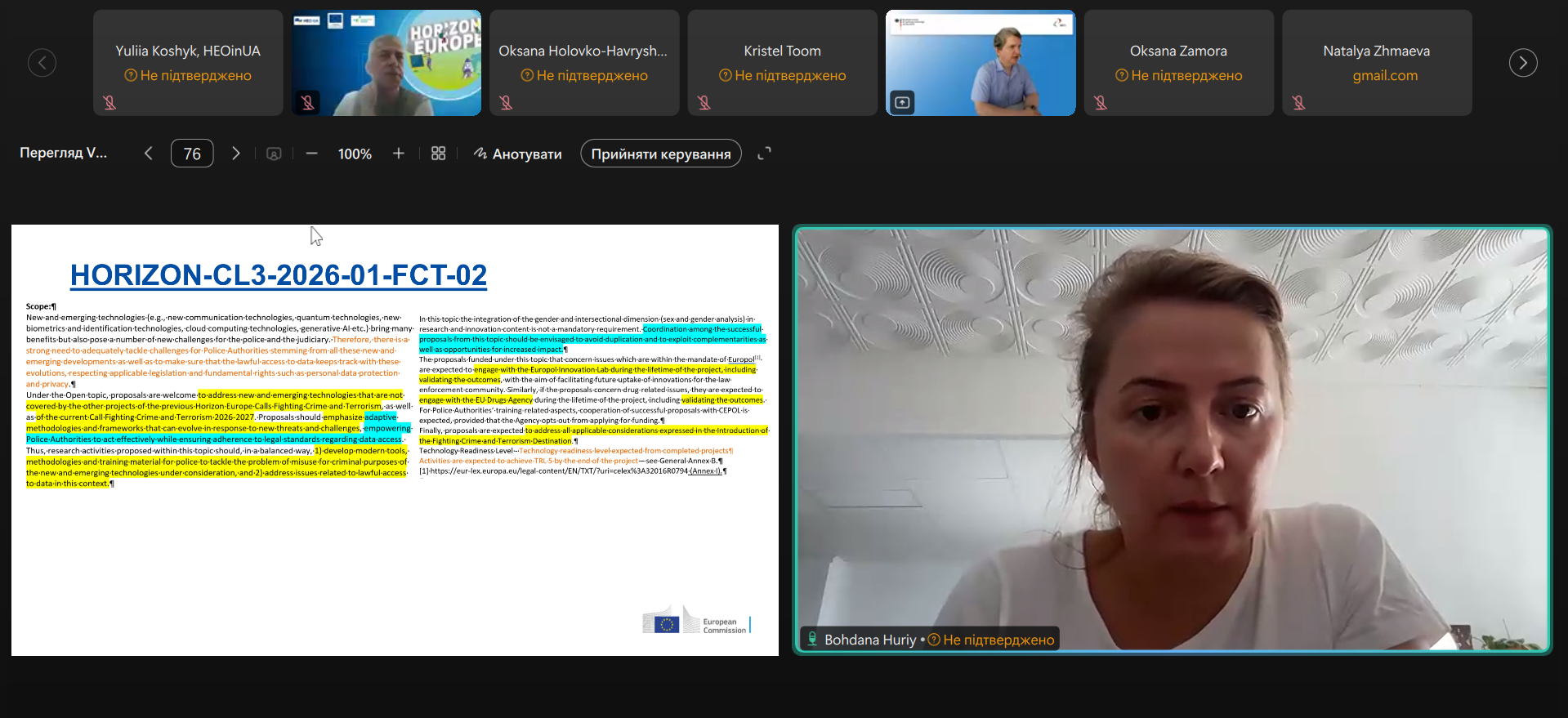
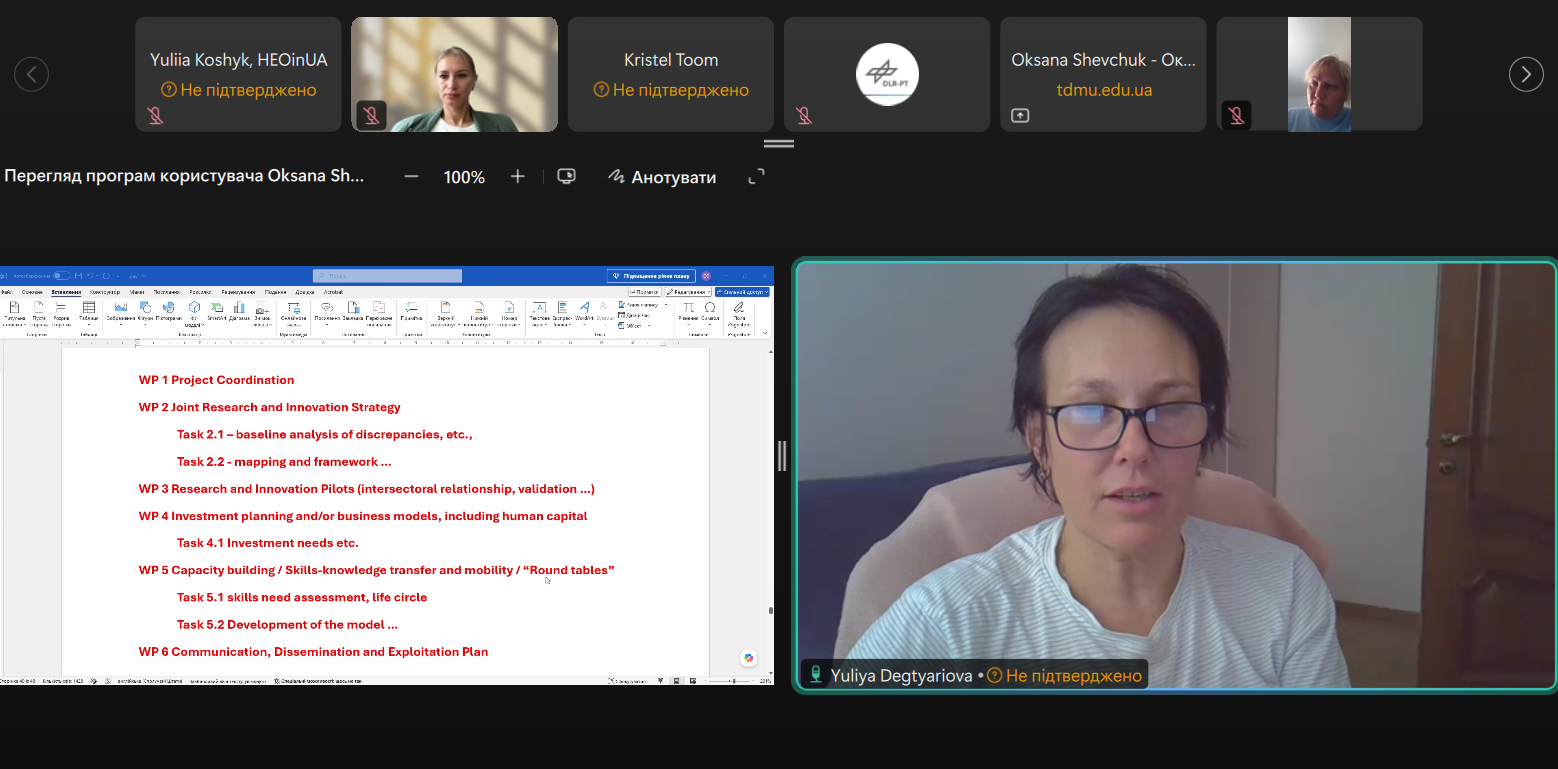
It should be noted that participants not only gained theoretical knowledge but also had the opportunity to practise by working in small groups, which had been formed in advance according to subject areas. Each day of the event, they worked on analysing a specific call, drafting individual sections, learnt how to develop application packages for the call, draw up a work plan, calculate a budget, and so on. Participants presented their results to the trainers, discussed them and refined them. In addition, they were given homework assignments, the results of which were also discussed with the trainers.
The event generated considerable interest among Ukrainian researchers and innovators interested in European Union grant funding, resulting in a large number of registrations. However, only those who passed the selection process based on strict criteria were able to take part.
The results of the three days of intensive training at the Camp were summarised by Yehor Pyvovarov, an expert on science and innovation policy at the EU Delegation to Ukraine, and Igor Taranov, Head of Horizon Europe Office in Ukraine, NRFU.
*The Eastern Partnership (EaP) is a joint initiative of the European Commission, involving the EU, its Member States and five Eastern European partner countries: Ukraine, Azerbaijan, Armenia, Georgia and the Republic of Moldova.