Flexible robotic solutions based on Artificial Intelligence development: the experience of Igor Sikorsky Kyiv Polytechnic Institute in the implementation of the MASTERLY project
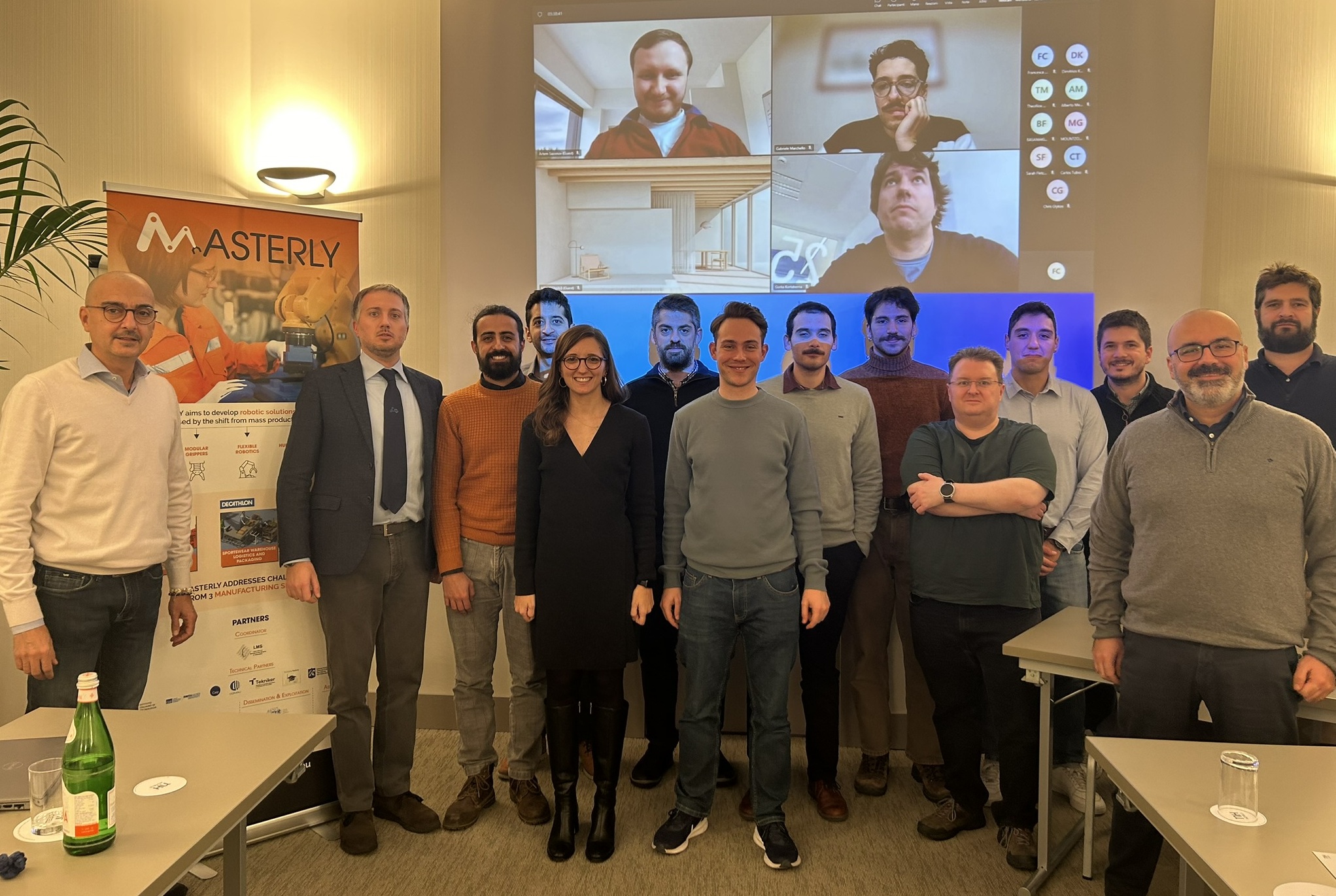
MASTERLY: Nimble Artificial Intelligence driven robotic solutions for efficient and self-determined handling and assembly operations is a project funded by the European Union, aimed at developing flexible robotic solutions based on modular gripping devices and state-of-the-art robotics technologies, such as mobile, industrial and collaborative robots, as well as «smart» cranes. These solutions are complemented by AI-powered advanced control and perception capabilities, allowing them to act autonomously to handle many different parts varying in size, shape and material.
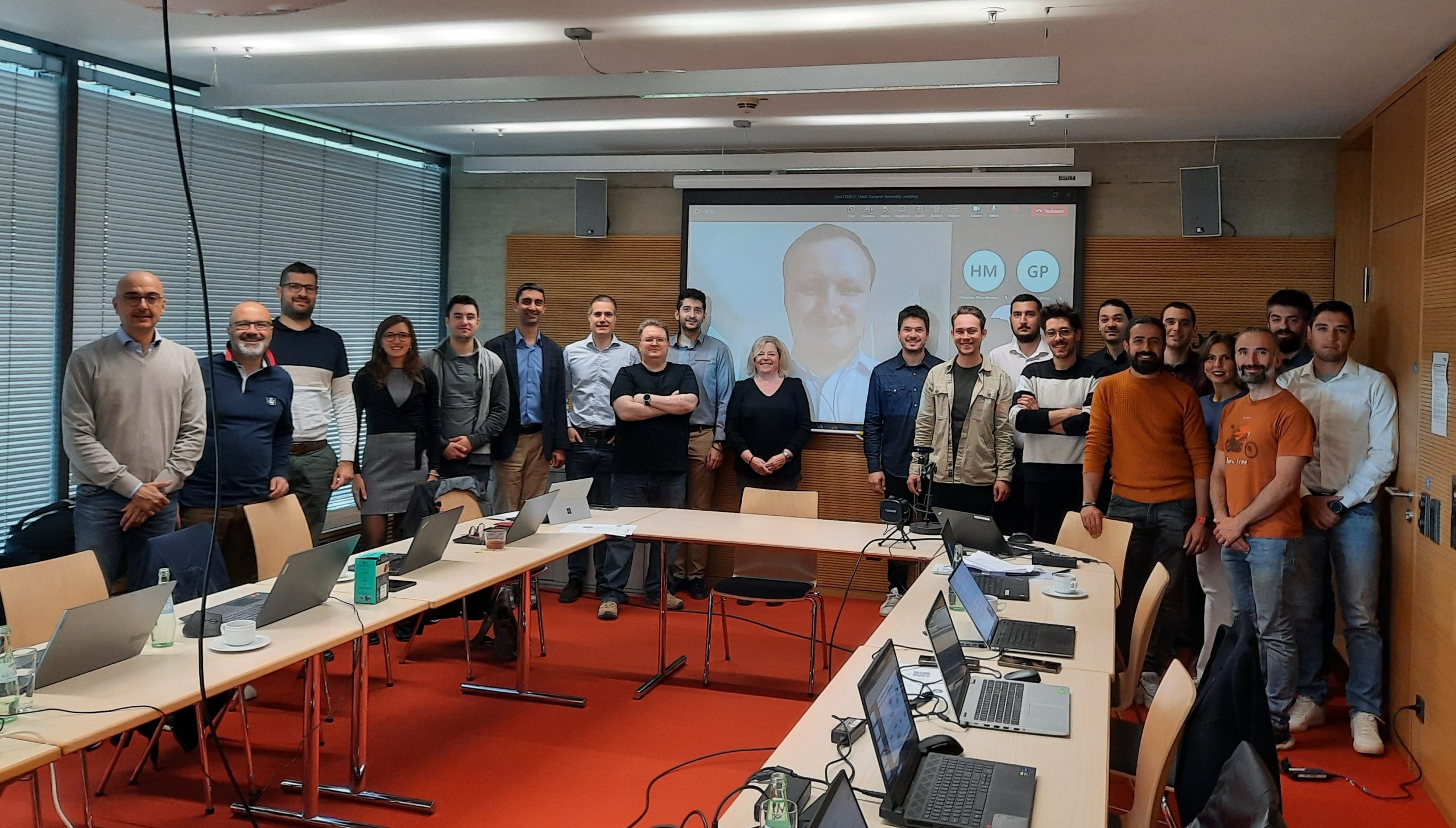
The project is implemented by a consortium consisting of 15 partners, including the National Technical University of Ukraine “Igor Sikorsky Kyiv Polytechnic Institute” (KPI). About the implementation of the project, cooperation with partners and participation in the Horizon Europe EU Programme we communicated with Artem Sazonov, PhD in technical sciences, Associate Professor of the department of technical and software automation tools of the Faculty of Automation, Industrial Engineering and Ecology, of KPI, who is the scientific leader of the MASTERLY project team in his organisation.
The current project is related to the area of scientific interests of Artem Sazonov. He actually learned about the possibilities of the Horizon Europe Programme from colleagues from European universities during an internship at the Technical University of Vienna (TU Wien), Austria, aimed at researching computer vision systems for their application in dynamic environments – is the direction in which MASTERLY is currently implemented. Returning to Ukraine, after some time he decided to apply with his colleagues. However, with extensive experience in research work, the team lacked experience in participating in grant programmes.
Later, scientists of KPI decided to try to submit a project proposal to the bilateral call (Ukrainian-Lithuanian) and thus met colleagues from Lithuania. Subsequently, during a personal conversation with colleagues from Slovakia, they decided to assemble a consortium and submit a project proposal to the Horizon Europe call. For this, taking advantage of the opportunities at brokerage and matchmaking events, they met colleagues from Germany, Italy, etc., this became the impetus for the start of international project activities. And also thanks to international events, they came out to their colleagues from Greece. This is the Laboratory of Production Systems and Automation of the University of Patras and currently coordinates the MASTERLY project.
Despite the beginning of the war and the extreme difficulty of continuing to work in these conditions, together with European partners, they applied for the call: HORIZON-CL4-2022-TWIN-TRANSITION-01-04: Intelligent work piece handling in a full production line (Made in Europe Partnership) (RIA) and received a positive decision. The scientist notes that this is not the first project of the Ukrainian team, the previous ones were not successful and were included in the reserve lists of the European Commission despite the high scores and very coordinated work of the partners. Those are several projects, including Cluster 1 Health, WIDERA, etc. But the experience gained was very interesting and valuable for further grant activities.
What became the key criterion for the success of the application? Artem Sazonov believes that this is high-quality training. First of all, it is the selection of strong and experienced partners, establishing stable communication with them. In addition, this is the experience of the coordinator. And what is no less important – clearly distributed roles and tasks between partners and their quality performance. However, Mr. Sazonov emphasises that his area of responsibility in the consortium includes only the implementation of the scientific part, because it is extremely difficult to combine with organisational work as a coordinator and partially distracts from direct scientific activity.
As for the preparation of the project proposal, the scientific leader of the team advises, from his own experience, to start working hard in advance, even when the call has not yet been officially announced, but there is only a draft of the future work programme. Then there is enough time to get to know each other and choose partners, and hold meetings with them. At the same time, he adds that having experience of participating in other calls, contacts having been established in advance, as well as a ready-made idea from the previous call, even if it has not become successful, but it is quite possible to write a grant application in 2-3 months.
Among the difficulties faced by the Ukrainian project participants, it should be noted certain features of the management system on the part of state institutions in Ukraine. For example, these are the requirements for translations into Ukrainian while preserving the form of the Grant Agreement, the Consortium Agreement, the budget and other documents that are originally in English. These requirements did not become an obstacle, but they significantly slowed down and complicated the project implementation process at the initial stage. But having experience and the necessary knowledge, these problems became completely solvable for the KPI team.
Separately, they discussed with Artem Sazonov the issue of protecting one’s own ideas, intellectual property, in particular copyright or patents, or other protective documents, the difference between Ukrainian and European patent legislation. Attention was drawn to the problem of the lack of a single patent in the global space, which has long been acutely facing the European Union and is associated with obstacles at the legislative level.
Was the goal set before the formation and submission of the project application achieved? The scientist answered absolutely yes, but emphasised that he is not going to stop there. In the perspective is the preparation for participation in three more Horizon Europe calls.
The ultimate goal of the MASTERLY project is to increase the level of automation of enterprises in Europe in general. And for Ukraine, the technologies developed within the framework of the project will be distributed among Ukrainian colleagues and partners, departments, and universities. Also, on the basis of the obtained achievements, it will be possible to continue developing technologies already with domestic partners in the future.
Summing up his story, Artem Sazonov wished the future Horizon Europe participants to try applying for calls. “After all, until you try, you won’t understand! I would advise you not to be afraid. If you want to achieve something, you have to take and do, not transfer and not wait for someone to do it for you, that’s the only way you will learn. If you just join some team as a passive performer, it will not bring you any benefit. If your goal is to get a result, until you go through this path yourself, find a consortium, form an idea yourself, nothing will work”, – he emphasised.
Reference:
MASTERLY
Duration of the project: 1 January 2023 – 30 June 2026
Funded under: Digital, Industry and Space
Coordinated by: The Laboratory for Manufacturing Systems & Automation, University of Patras (Greece)